
No Linn Online Warrant List
No official Linn County, Kansas active warrant search or most-wanted list was located on the county website or sheriff pages during the research for these pages. Search results did include unofficial warrant-lookup sites and a Linn County Oregon sheriff warrant page. Those are not official Linn County Kansas sources. Treat any third-party hit as unverified until the Sheriff's Office, District Court, or issuing municipal court confirms the warrant.
The official verification chain is direct: contact the Linn County Sheriff's Office, search the district court case record when the warrant relates to a court case, check the municipal court that issued a city citation or ordinance case, use KBI Most Wanted only as a state wanted-person source, and use the county KORA form only for public sheriff records that are releasable. Active investigations, sealed warrants, and unexecuted search warrants may be withheld.
The KBI Kansas Most Wanted page is an official statewide wanted-person source, but it is not a complete Linn County warrant database.
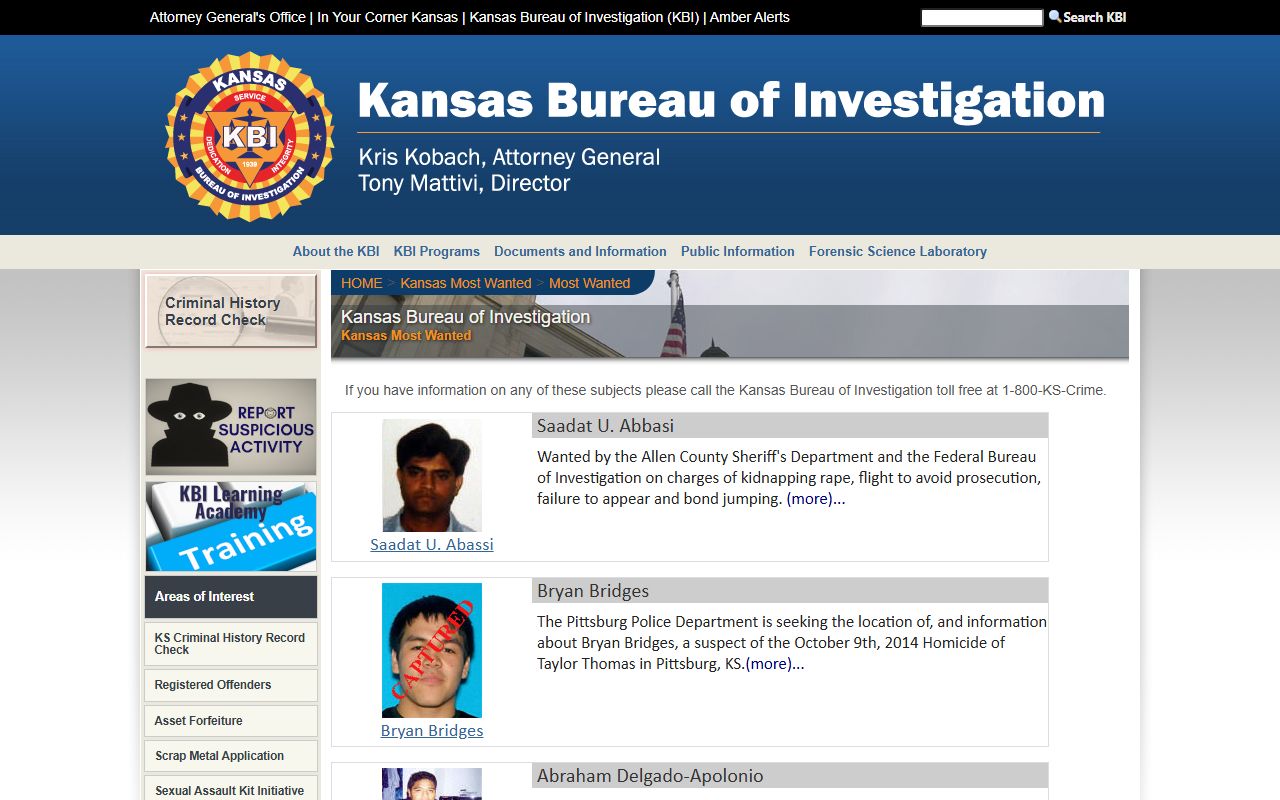
Use KBI Most Wanted for state-level wanted-person information, then verify any local warrant question through Linn County or the issuing court.
Linn County Warrant Verification
The Sheriff's Office is the primary local law enforcement contact. Sheriff James Akes is listed as Linn County Sheriff, and the sheriff directory gives the office at 308 Main Street, Suite 103, Mound City, KS 66056, phone 913-795-2665, emergency 911, Monday-Friday 8 a.m. to 4 p.m., with 24-hour emergency service. Warrants should be confirmed directly because online case data can lag, a warrant can be recalled, or a sealed warrant may not appear in public search.
- Call or visit the Linn County Sheriff's Office for a direct warrant-status question.
- Search Kansas CaseSearch for related district court cases, failure-to-appear entries, bond orders, and warrant-related docket events.
- Contact La Cygne, Mound City, or the issuing municipal court for city ordinance or municipal traffic matters.
- Use the inmate roster only to confirm custody after an arrest, not to prove that an unresolved warrant exists.
- Use a Linn County KORA request for public sheriff records that are not available online, knowing that active or sealed records can be withheld.
For district court case records, Kansas CaseSearch is the public search path. For sheriff records, the county KORA process is the records-request route. These channels are related but not interchangeable.
Types of Linn County Warrants
Warrants serve different purposes. A bench warrant often follows failure to appear or failure to comply. An arrest warrant authorizes law enforcement to arrest a person based on a court order. A search warrant authorizes a search of a place, person, or item, and many search-warrant materials can remain sealed or unavailable before execution. Municipal court warrant terms in Mound City code include municipal court bench warrant, show cause or probation violation warrant, and citation warrant.
- Arrest warrant authorizes an arrest based on a judge's order or criminal proceeding.
- Bench warrant is issued by a judge, often after missed court or failure to comply.
- Citation warrant can arise from an unresolved municipal citation or failure to appear.
- Show cause or probation violation warrant can follow alleged noncompliance with a court order.
- Search warrant authorizes a search and may be sealed or unavailable while investigative needs remain.
Municipal warrants are not always visible in the same place as district court criminal cases. If a ticket or ordinance case came from a city police department, confirm the issuing court before assuming it belongs to District Court.
Municipal Warrant Routes
Mound City and La Cygne are important local warrant routes. Mound City code establishes a municipal court for city ordinance violations and says the Kansas Code of Procedure for Municipal Courts governs practice and procedure. The same code makes failure to appear in municipal court unlawful and allows punishment by up to 30 days incarceration and/or a fine up to $250. It also adds a $50 cost when the municipal court orders a bench warrant, show cause or probation violation warrant, or citation warrant for failure to appear or failure to comply.
The Mound City municipal court code is the local source for municipal court jurisdiction, failure-to-appear rules, and warrant-related costs.
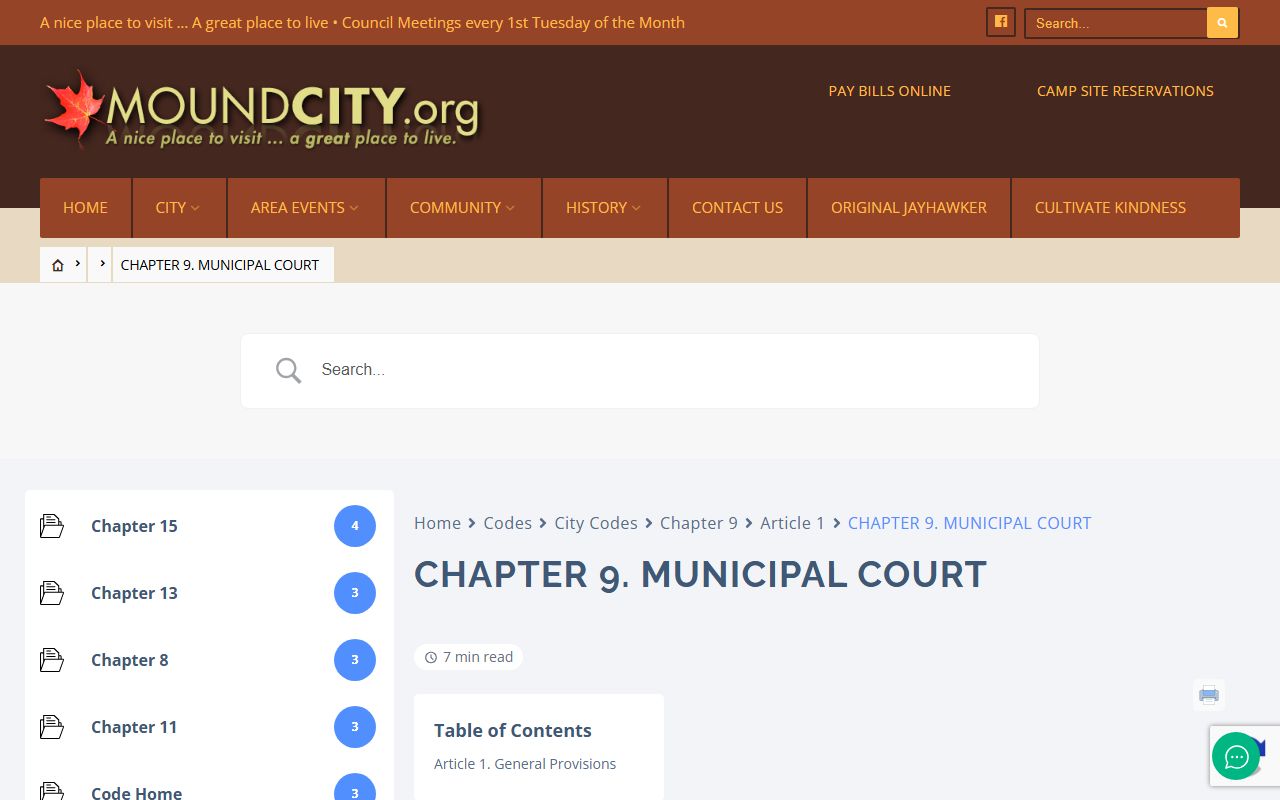
Mound City code gives a concrete local reason to check municipal court, especially when a warrant concern follows a city citation.
La Cygne Municipal Court convenes the third Tuesday of each month at 6 p.m. at the La Cygne Community Building, 204 N Commercial, La Cygne, KS 66040. Its public court page warns that failure to appear can result in being found or fined for failure to appear, possible license suspension, and/or warrant issuance. It also helps users identify the correct court by issuing agency: matters outside city limits may involve the Linn County Sheriff's Department, Linn Valley Police Department, Kansas Highway Patrol, or Linn County District Court in Mound City.
Warrant Verification Fields
Because no official online Linn County warrant database was located, there is no county warrant search-field table to render from a public form. The safest substitute is a field checklist for official verification. Gather enough detail for the sheriff, clerk, or municipal court to identify the correct person and case without relying on a third-party warrant list.
| Field | Why It Matters | Where to Use It |
|---|---|---|
| Full legal name | Separates people with similar names. | Sheriff, District Court, municipal court, KBI sources. |
| Date of birth | Helps confirm identity without relying on name alone. | Sheriff and court clerk verification. |
| Case number or citation number | Links the warrant question to a docket or municipal citation. | Kansas CaseSearch, Clerk of the District Court, municipal court. |
| Issuing agency or court | Distinguishes sheriff, city police, Highway Patrol, District Court, and municipal court matters. | Routing the call or request. |
| Last known court date | Useful when the issue may be failure to appear. | District Court or municipal court clerk. |
| Bond or notice paperwork | Can show terms, surety, and required appearance details. | Sheriff, bonding company, or court clerk. |
Do not send sensitive identity documents to an unofficial site. Use direct official channels for confirmation and copies.
What Warrant Records Show
The local sources found during research did not publish a public Linn County warrant listing with visible sample fields. Mound City and La Cygne sources show warrant and failure-to-appear consequences, but not a searchable warrant-result page. If an official court or sheriff record is available, the information may be more limited than a public expects because sealed warrants, active investigative records, and juvenile matters can be restricted.
| Field | What It May Show |
|---|---|
| Name | The person named in the warrant or related court case. |
| Case number | The district court, municipal court, or citation number tied to the warrant. |
| Warrant type | Bench, arrest, citation, show cause, probation violation, or search warrant when releasable. |
| Issuing court | Linn County District Court, Mound City Municipal Court, La Cygne Municipal Court, or another court. |
| Basis | Failure to appear, failure to comply, alleged offense, probation issue, or other court reason. |
| Date issued | The date the judge or court issued the warrant, if public. |
| Bond or conditions | Cash, surety, no-bond, appearance requirement, or other release terms if public and current. |
| Status | Active, recalled, served, quashed, resolved, sealed, or not publicly available. |
Resolve an Outstanding Warrant
Warrant resolution depends on the issuing court and warrant type. A failure-to-appear warrant may require a new court date, payment, bond, or surrender. A criminal arrest warrant may require counsel, booking, bond review, and a court appearance. A municipal citation warrant may need municipal court contact before any payment or appearance plan is accepted. If the person has a lawyer, counsel should be contacted before surrender or payment decisions.
- Identify the issuing court or agency from paperwork, citation, docket, or sheriff confirmation.
- Ask whether the warrant is active, recalled, served, sealed, or resolved.
- Confirm bond, cash-only requirements, surety options, and whether a court appearance is mandatory.
- Use only approved bonding companies if surety bond is permitted in Linn County.
- After resolution, verify the court docket and driver status if the warrant arose from a traffic failure to appear.
Important: An active warrant can lead to arrest. Verify terms directly with the court or sheriff before appearing in person.
Warrant Costs and Assessments
Local municipal rules can add costs to a warrant matter. Mound City code sets local court costs and identifies specific warrant-related costs for municipal court warrants ordered after failure to appear or failure to comply. Kansas municipal court statutes also govern court costs and assessment distribution. These cost rules do not mean every Linn County warrant has the same amount. They show why the issuing court must be checked before payment.
The Kansas Revisor page for K.S.A. 12-4112 covers municipal court costs.
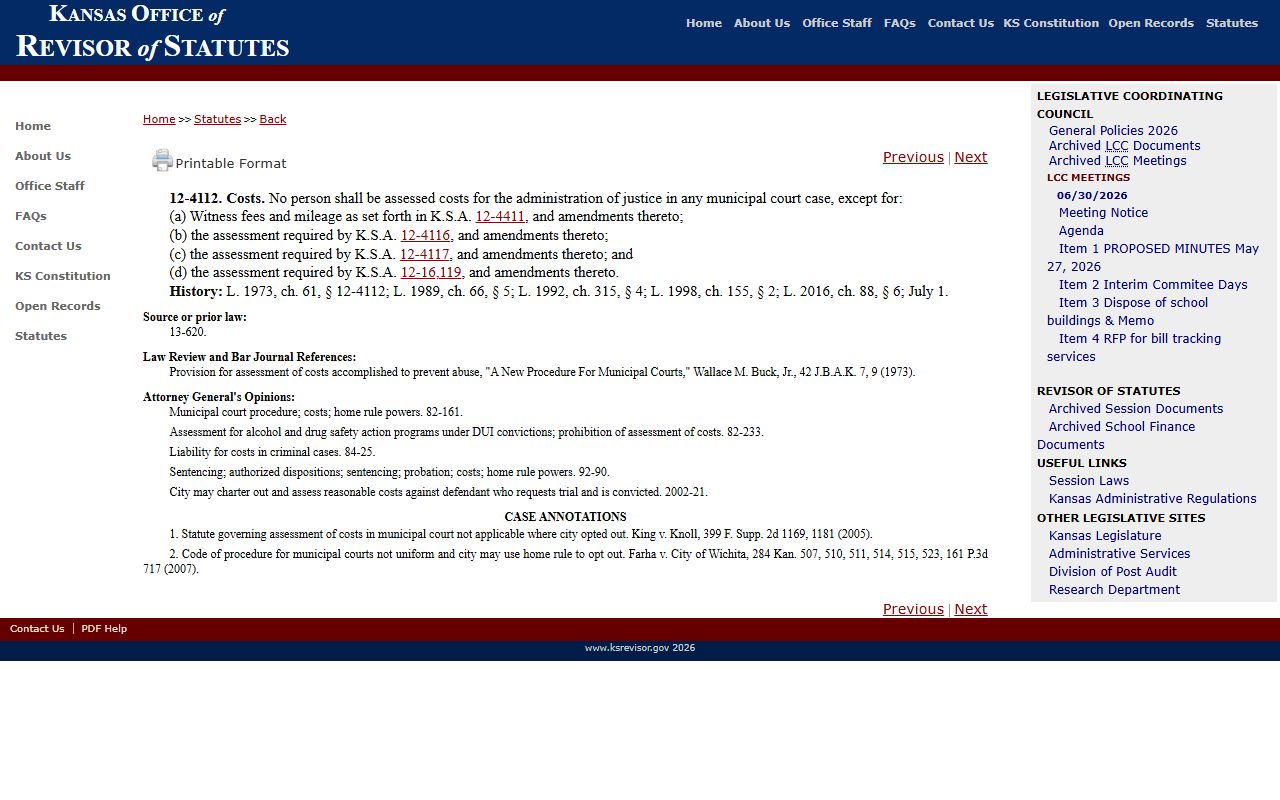
Municipal court cost authority helps explain why city warrant matters can carry court-specific costs beyond the original citation amount.
The Kansas Revisor page for K.S.A. 12-4117 covers municipal court assessment distributions.
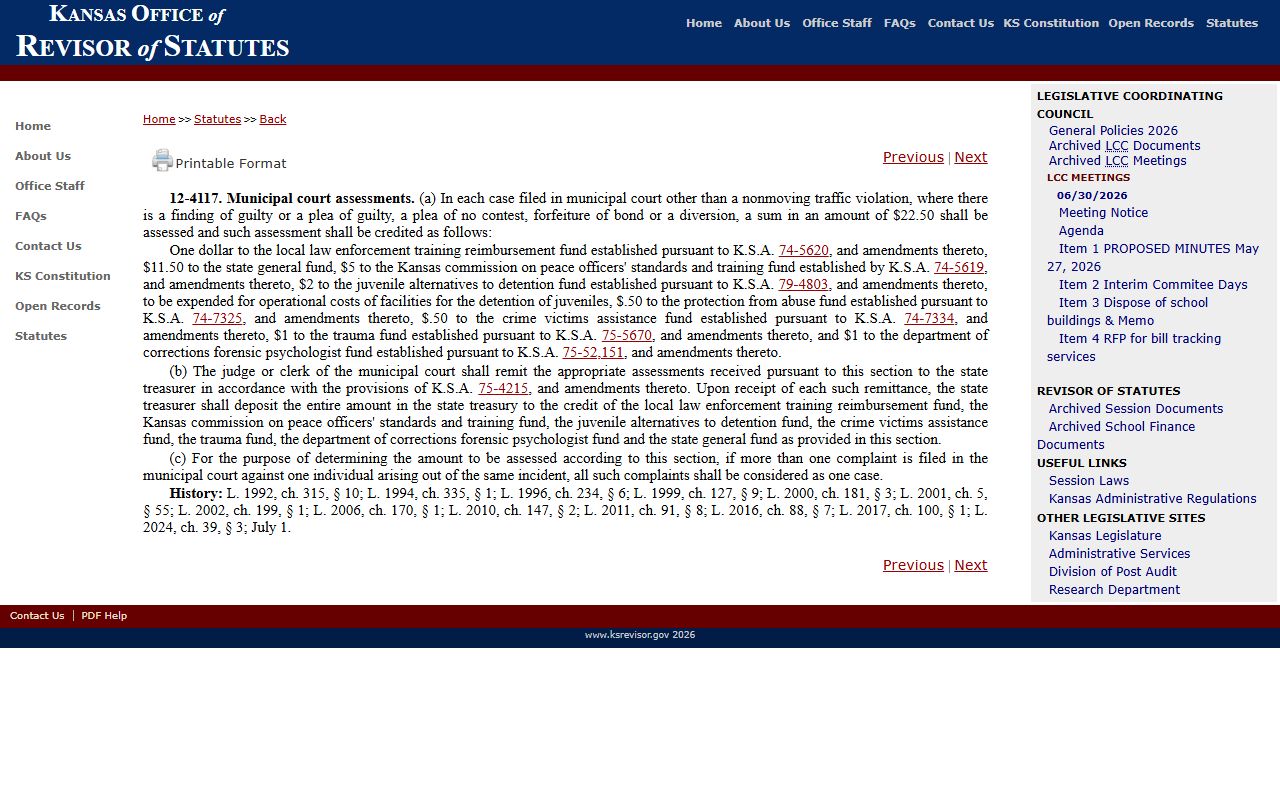
Assessment rules are separate from the warrant's active status, so payment questions should always be tied back to the issuing court.
KORA and Sheriff Records
The Linn County KORA request process applies to county-government and sheriff records that are public and releasable. The County Clerk is the county Freedom of Information Officer, while the Sheriff's Office is the practical source for sheriff records. A KORA request can ask for public records, but it cannot force release of sealed warrants, active investigative material, juvenile records, security-sensitive records, or court records that must be requested from the court.
For district court case records, use CaseSearch, courthouse terminals, or the Clerk of the District Court. For municipal court records, contact the city court. For statewide wanted-person information, use official KBI sources. For custody after an arrest, check the inmate roster. These channels form a chain, and each one answers a different part of the warrant question.
Note: County KORA is a records-request process, not an instant active-warrant confirmation tool.
Restricted Linn County Warrants
Not all warrant records are public. Unexecuted search warrants, sealed warrant affidavits, juvenile warrant records, active investigative records, protected victim information, medical or treatment material, and some federal warrant records may be unavailable through local public channels. Federal warrants are handled by federal agencies and federal courts, not by Linn County District Court. A state or county court docket may also show a warrant-related event without showing the warrant document itself.
A clean public search result should not be treated as legal proof that no warrant exists. It may mean the record is sealed, in a municipal court, held by another agency, already resolved, entered under a different case number, or not available online. Direct verification remains the safest path for Linn County warrant records.