
Linn County District Court Overview
Linn County is in the 6th Judicial District with Bourbon and Miami counties. Kansas district courts are courts of general jurisdiction and exist in all 105 counties. They hear felony criminal cases, higher-level misdemeanors filed in district court, civil actions, probate, divorce and domestic matters, juvenile cases where public access is restricted, small claims, limited actions, traffic matters filed in district court, and appeals or related proceedings from municipal courts when applicable.
The Kansas hierarchy starts with the Kansas Supreme Court, then the Kansas Court of Appeals, then Kansas District Courts, with municipal courts below the district-court level for city ordinance and municipal traffic matters. Appeals from Linn County District Court usually move to the Kansas Court of Appeals unless a case type goes directly to, or is transferred to, the Kansas Supreme Court. Federal cases from Linn County are separate and use the U.S. District Court for the District of Kansas and the Tenth Circuit appeal path.
The manifest image below is tied to the official Kansas eFlex filing site, which is separate from public case lookup.
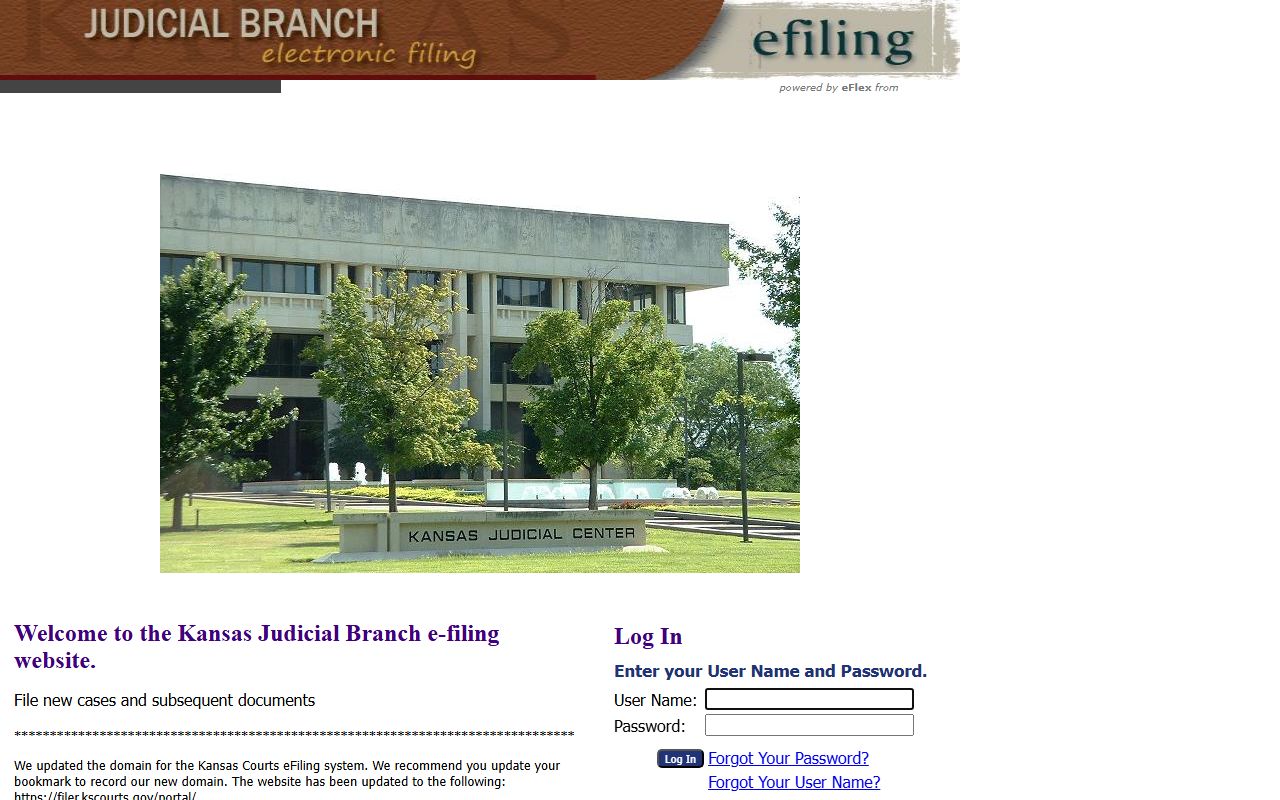
State court structure and online filing access help explain why some Linn County matters are searched online while others still require local clerk contact.
Linn County District Court Contacts
The court-related address is the District Court Justice Center at 308 Main Street, Suite 105, Mound City. The county administrative courthouse at 315 Main Street is nearby but serves different county functions, including the County Clerk and KORA process. For district court case files, dockets, divorce decrees, probate filings, and criminal records, use the District Court Justice Center and Clerk of the District Court path.
| Court or office | Role | Address | Phone |
|---|---|---|---|
| Linn County District Court Justice Center | District court trial venue and clerk office | 308 Main Street, Suite 105, Mound City, KS 66056 | 913-795-2660 |
| Clerk of the District Court | Maintains district court case files and docket records | 308 Main Street, Suite 105, Mound City, KS 66056 | 913-795-2660 |
| District Judge Andrea Purvis | Linn County district judge per Kansas courts snippet | 308 Main Street, Mound City, KS 66056 | 913-795-2622 |
| La Cygne Municipal Court | City ordinance and municipal traffic matters | 204 N Commercial, La Cygne, KS 66040 | 913-757-2144 |
| Mound City Municipal Court | City ordinance matters under city code | Mound City City Hall municipal courtroom | 913-795-2002 main office listed by city source |
| Pleasanton Police and city matters | City law enforcement and traffic enforcement route to local city process | 1608 Laurel Street, Pleasanton, KS 66075 | Police 913-352-8334; City Hall 913-352-8257 |
Linn County Court Hierarchy
District Court is the state trial court for Linn County. Municipal courts are city courts with limited jurisdiction over city ordinance violations, many municipal traffic tickets, and local code matters. Mound City code establishes a municipal court for violations of city ordinances and says the Kansas Code of Procedure for Municipal Courts governs its practice and procedure. La Cygne Municipal Court meets the third Tuesday of every month at 6 p.m. at the La Cygne Community Building and lists Municipal Judge John Purvis and City Prosecutor Lauber Municipal Law.
| Level | Role for Linn County cases | Common records |
|---|---|---|
| Kansas Supreme Court | Highest state appellate court | Published opinions, direct appeals in limited case types, transferred matters |
| Kansas Court of Appeals | Intermediate appellate court | Appeal records from District Court cases |
| Linn County District Court | General jurisdiction trial court in the 6th Judicial District | Civil, criminal, probate, domestic, juvenile where restricted, small claims, limited actions, district traffic |
| Municipal Courts | City ordinance and municipal traffic court | City citations, ordinance violations, failure-to-appear records, local fines and costs |
The Kansas municipal court procedure title is one statute source tied to municipal court practice.
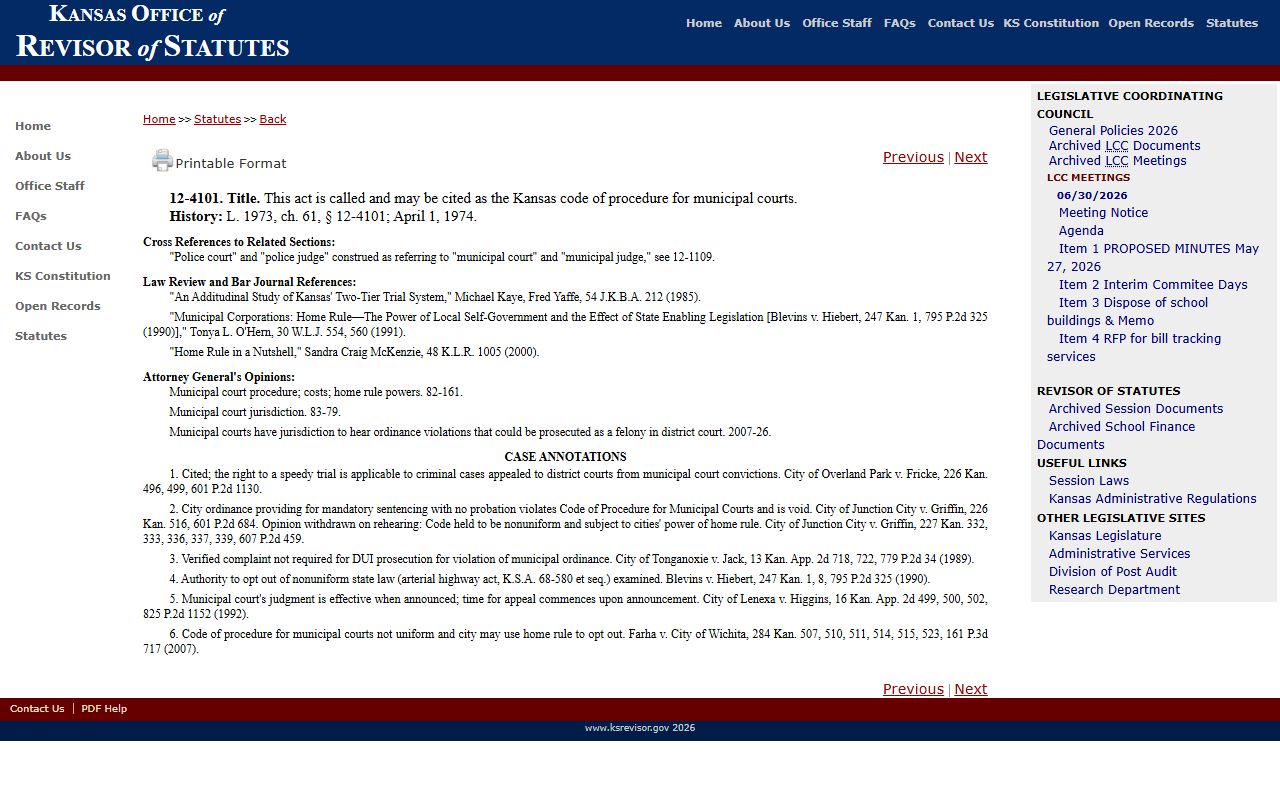
Municipal court statutes matter because a city ticket or ordinance case may not be a Linn County District Court case at first.
District Court vs Municipal Court
The court named on a ticket, notice, or complaint controls where to search. A La Cygne city citation belongs with La Cygne Municipal Court unless it is appealed or connected to a district court matter. Mound City ordinance violations are handled through Mound City Municipal Court under city code. Sheriff, Highway Patrol, felony, divorce, probate, and district-level civil matters are not La Cygne municipal cases merely because the person lives there.
| Question | Linn County District Court | Municipal Court |
|---|---|---|
| Main jurisdiction | General Kansas trial court jurisdiction | City ordinance and municipal traffic jurisdiction |
| Criminal matters | Felonies and district-level misdemeanors | City ordinance violations and municipal cases |
| Family and probate | Divorce, domestic, probate, guardianship, conservatorship | Not the usual venue |
| Traffic | Sheriff, Highway Patrol, district-level, or appealed matters | City-issued tickets and ordinance traffic cases |
| Records access | CaseSearch, courthouse terminal, Clerk of the District Court | City clerk or municipal court page, plus local payment rules |
Linn County Case Movement
Civil and criminal cases move through different steps, but both create docket events. A docket is the chronological list of filings, hearings, orders, settings, and outcomes. In Linn County District Court, public docket information may appear through CaseSearch when the case is public and electronically available. If a record is older or missing from the portal, the courthouse terminal or clerk channel is the practical fallback.
Criminal flow: Arrest or charging decision › first appearance › complaint or information › arraignment › pretrial motions › plea or trial › disposition › sentencing › appeal or post-judgment events.
Civil flow: Petition filed › summons or service › answer › motions › discovery or settlement activity › hearing or trial › judgment › collection, satisfaction, appeal, or other post-judgment events.
Probate and domestic cases create their own event paths, such as petition, notice, hearing, order, letters, decree, accounting, or final closing. Juvenile, adoption, care and treatment, protection, and some domestic categories may have restricted access.
Linn County District Court Dockets
Kansas CaseSearch is the central public online channel for district court case information. Official Kansas sources state the former public access portal was replaced by CaseSearch, and the newer tool added more search types, event filtering, and financial details. Public users can search by case number, party name, business name, citation, or other criteria available for the user role. Official Smart Search instructions say a record or case number or a name is required.
Public records not available through the online portal may still be available at a courthouse terminal when the record is otherwise public. Sealed cases and sealed records are not available through CaseSearch or courthouse terminals. Kansas Supreme Court Rule 22 governs public electronic access to district and appellate case records, so the absence of a record online is not proof that no case exists.
The manifest image below points to the Kansas district court fees page, one official fee source used for district court filing context.
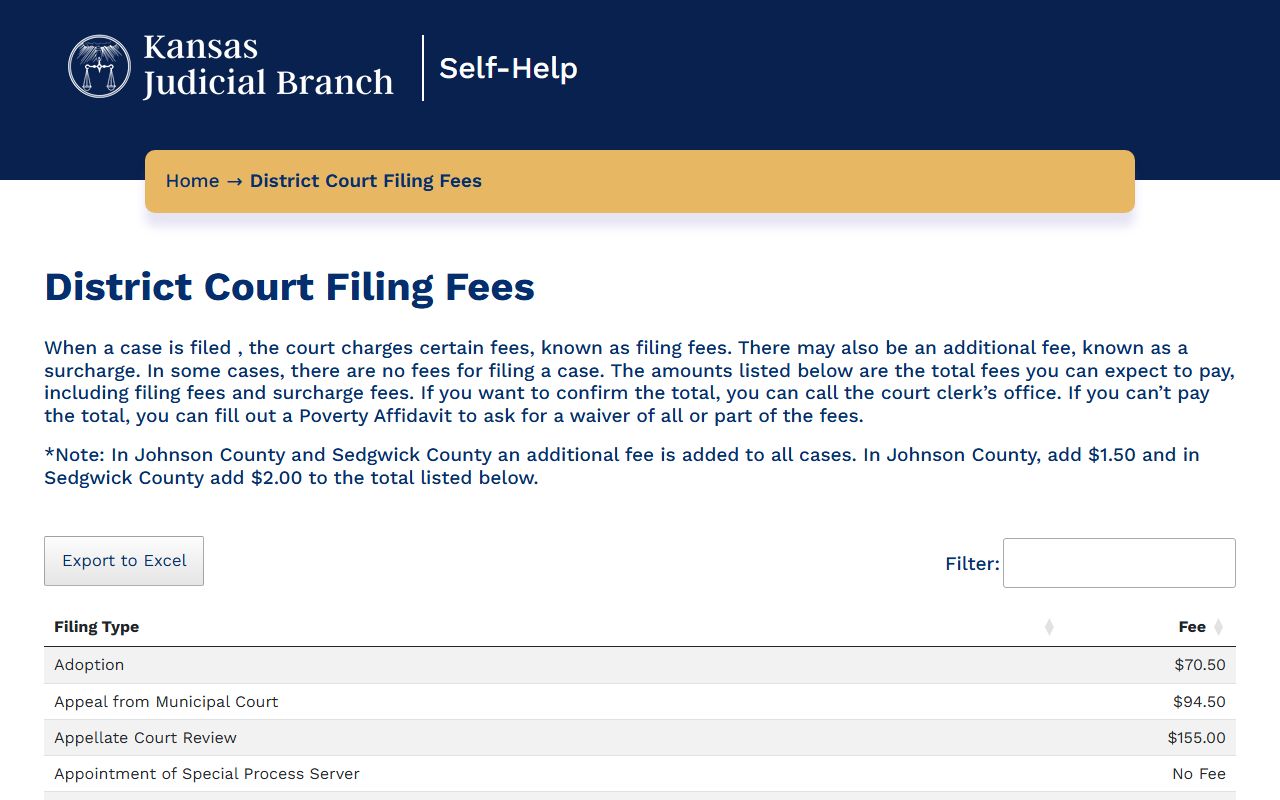
Filing, fee, and search systems serve different purposes, so a public user should use CaseSearch for lookup and the clerk for certified copies.
Linn County District Case Types
District Court case types in Linn County include several records that are often searched from different angles. Criminal court records can include complaint or information, charges, bond orders, arraignment entries, plea documents, motions, disposition, sentencing orders, probation terms, fines, restitution, and post-judgment events. The County Attorney files and prosecutes local criminal cases, but the court case file is maintained by the Clerk of the District Court.
- Civil: petitions, answers, service returns, motions, orders, judgments, garnishments, liens, and satisfaction filings.
- Domestic: divorce files and decrees, with privacy limits for some family matters.
- Probate: estates, wills, trusts, guardianships, conservatorships, and determination of descent.
- Criminal: filed charges, hearings, pleas, dispositions, sentencing, and probation terms.
- Traffic: district-level traffic cases, sheriff or Highway Patrol matters, and some cases tied to criminal or appellate proceedings.
The Kansas municipal court clerk statute also helps separate city court clerk duties from state District Court functions.
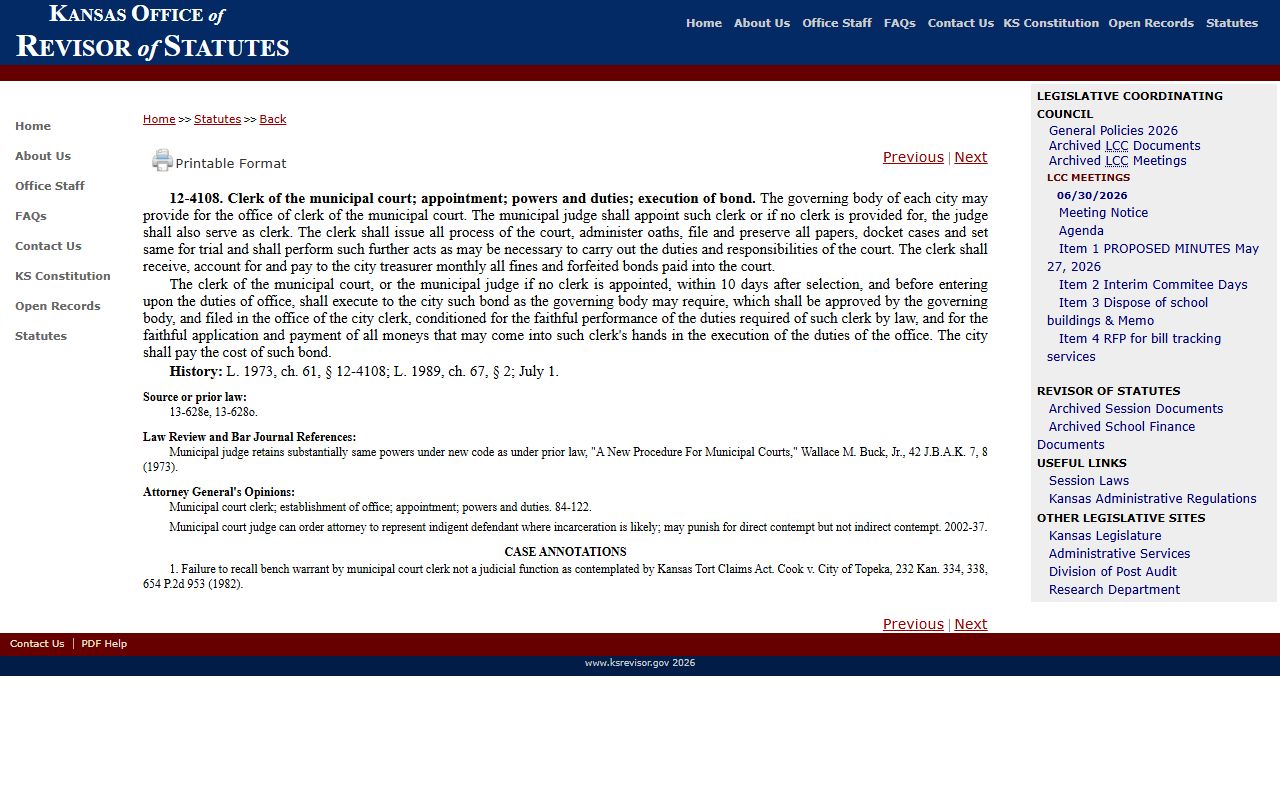
That separation is important when a person has both a city citation and a district court case with similar facts.
Linn County Court History
Mound City is the county seat and the court and county offices cluster around Main Street. Local official history states that the Linn County Courthouse in Mound City was built in 1886 and is the second-oldest operational courthouse in Kansas. Modern court operations use the District Court Justice Center at 308 Main Street, while county administrative offices use the historic county courthouse address at 315 Main Street. That two-address setup is one of the most important local details for record seekers.
Recent Kansas court-record changes also affect Linn County. Kansas CaseSearch replaced the former public access portal as the public district court search tool. Centralized case management and eCourt mean many current public records are searchable online or at courthouse terminals, while older or non-digitized records may still need clerk assistance. Note: Federal cases, bankruptcy cases, and Tenth Circuit appeals are not housed by Linn County District Court.