
Linn County Criminal Case Files
A Linn County criminal court record is the court file, not the first booking entry. The file begins when a complaint, information, or other charging document is filed in District Court. From that point, the Clerk of the District Court maintains the docket and the public case record under Kansas court access rules. The file can include the State of Kansas as the prosecuting party, the defendant name, charge counts, first appearance entries, bond orders, arraignment, plea entries, motions, orders, hearings, trial settings, disposition, sentencing, restitution, fines, fees, and later probation or post-judgment events.
Linn County is part of the Kansas 6th Judicial District with Bourbon and Miami counties. The Kansas Judicial Branch 6th Judicial District pages identify the district structure, while the local court address for case files is the Linn County District Court Justice Center at 308 Main Street, Suite 105, Mound City, KS 66056. The District Court handles felony criminal cases and district-level misdemeanor matters. City ordinance cases can begin in municipal court, including La Cygne or Mound City, unless they are appealed or otherwise routed to District Court.
The Kansas criminal history portal is a different product. A court case file shows what happened in one court case. A statewide name-based record check can collect criminal history information from the Kansas Central Repository. That difference matters when a person needs a docket, a certified sentencing order, or proof that a charge was dismissed.
The Kansas Criminal History Record Search is one state-level source for criminal history information.
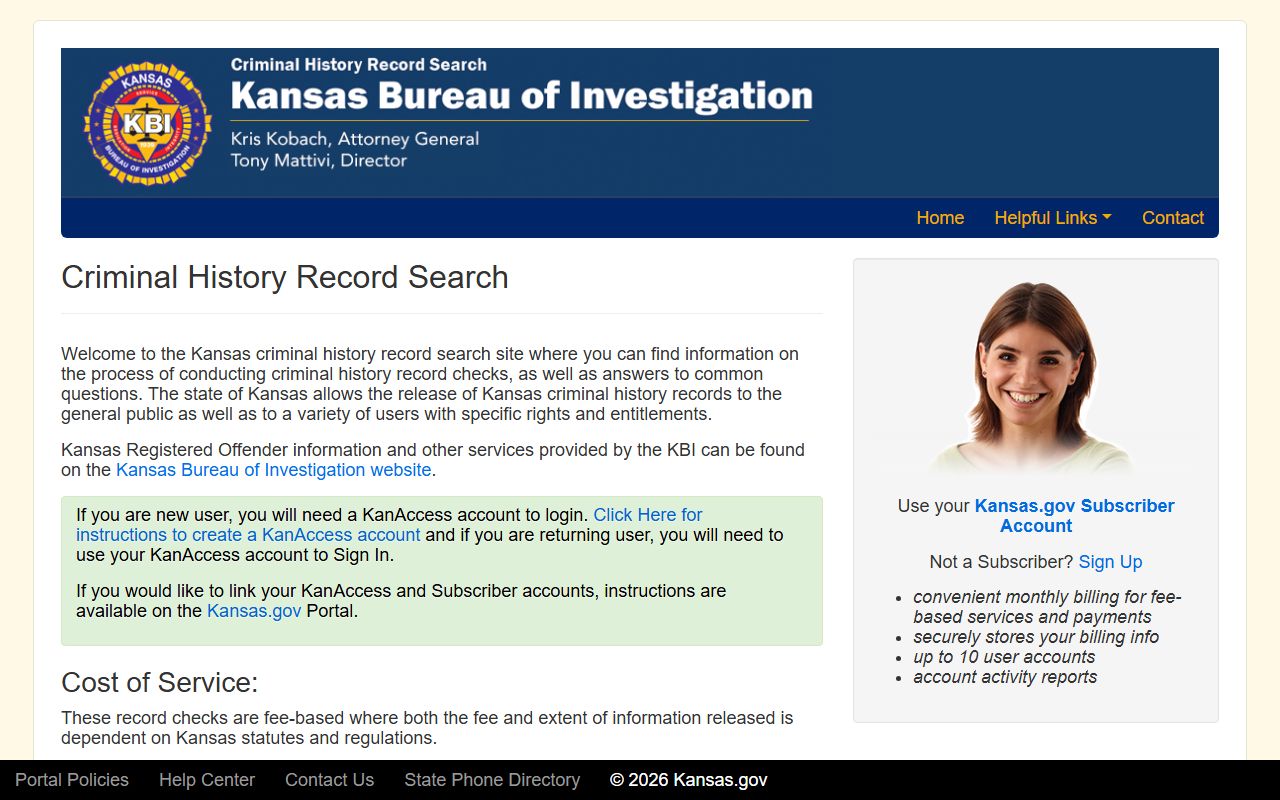
The court file still controls the case-specific Linn County record, especially for pleas, dispositions, sentencing orders, and certified copies.
Find Linn County Criminal Records
The central online search channel is Kansas CaseSearch. Kansas Judicial Branch materials state that CaseSearch replaced the former public access portal and provides public district court case information allowed by Kansas law. Public users can search by case number, party name, business name, citation, and other role-dependent criteria. Official Smart Search instructions say a record or case number, or a name, is required for searches. If the case number from a jail record or older paper file does not work, a party-name search is the practical next step.
- Open Kansas CaseSearch and use the public search path for district court records.
- Search by defendant name if the Linn County case number is unknown.
- Use a case number when available, trying Kansas formats such as year, case type, and sequence.
- Open the docket to review filed charges, hearing events, pleas, orders, disposition, and financial entries.
- Contact the Clerk of the District Court for certified copies, older case files, or public records that are not shown online.
CaseSearch is not the only access channel. Kansas court notices say public records not available through the portal may still be available at a courthouse terminal if the file is otherwise public. The Clerk of the District Court is the official office for certified district court copies and staff retrieval. County KORA requests are for sheriff and county-government records, not a substitute for judicial case-file access.
The Kansas Judicial Branch maintains the district court records search landing page for statewide court-record access. Use the statewide court source first, then move to the Linn County courthouse terminal or clerk office when the online result is incomplete.
Linn County Criminal Case Flow
Criminal court records are easiest to read in order. The charge record is filed first, then the docket grows as the case moves through hearings, motions, pleas, trial settings, and final orders. A single arrest can produce several counts. Some counts may be amended or dismissed while another count ends in a plea or conviction. The docket, disposition line, and sentencing entry must be read together before drawing a conclusion.
Case flow: Charges Filed › First Appearance › Arraignment › Pretrial Motions › Plea or Trial › Disposition › Sentencing › Post-Judgment Events
| Stage | What the Court Record Shows |
|---|---|
| Charges filed | Complaint or information, counts, statute references, severity level, and filing date. |
| First appearance and bond | Court appearance entries, release terms, bond amount or conditions, and future hearing dates. |
| Arraignment | Plea entry, counsel information, and orders setting the next stage of the case. |
| Pretrial and motions | Continuances, discovery issues, motion rulings, plea negotiations, and trial settings. |
| Disposition and sentencing | Dismissal, acquittal, guilty plea, verdict, probation, jail or prison term, fines, costs, restitution, and supervision terms. |
For a closer look at the filed counts before final outcome, use the Linn County arrest records and charges page.
What Criminal Court Records Show
Kansas district court public case information can include the case number, county and court, caption, party names, case type, filing date, status, hearing dates, docket-event list, disposition, judgment, and financial details. CaseSearch materials also note more search types, filtering within case events, and expanded financial details. Document access depends on whether the document is public, whether it was filed after the court joined eCourt, and whether Rule 22 or another law restricts the record.
| Field | What It Shows |
|---|---|
| Case number | The unique Linn County District Court identifier for the criminal case. |
| Caption and parties | The State of Kansas, defendant, attorneys, and other public party details. |
| Charges and counts | Each alleged offense, statute reference, severity level, and later amendments if entered. |
| Docket entries | A chronological list of filings, hearings, orders, pleas, and scheduling events. |
| Disposition | The outcome for each count, such as dismissed, guilty plea, verdict, or acquittal. |
| Sentence and financials | Probation, custody, fines, costs, restitution, bond, payment plan, and related assessments where public. |
| Restrictions | Sealed, expunged, juvenile, protected, or redacted material that is withheld from public views. |
Official portal materials do not prove that every public document image is online. A public docket entry may exist even when the actual motion, order, or journal entry must be requested from the Clerk of the District Court. Certified copies must come from the court, not from a screen capture.
Charges vs Convictions
A charge is an accusation filed in court. A conviction is a final result that follows a guilty plea, no contest plea accepted by the court, or a guilty verdict. Linn County criminal court records may show charges that were amended, reduced, dismissed, or resolved through diversion. Do not treat a charge list as a conviction list. Read the disposition for each count and the sentencing entry before using the record to understand the outcome.
| Point | Charge | Conviction |
|---|---|---|
| Meaning | An alleged offense filed by the prosecutor. | A final finding or plea that the offense was committed. |
| Where it appears | Charging document, docket, first appearance, and amended filings. | Disposition, judgment, sentencing order, and financial entries. |
| Can change? | Yes. It may be amended, reduced, dropped, or dismissed. | Later changes usually require court action, appeal, correction, or expungement. |
| Best proof | Filed complaint or information. | Certified disposition or sentencing order from the Clerk of the District Court. |
The Kansas.gov record-check instructions explain state criminal history checks and the name-based record-check process.
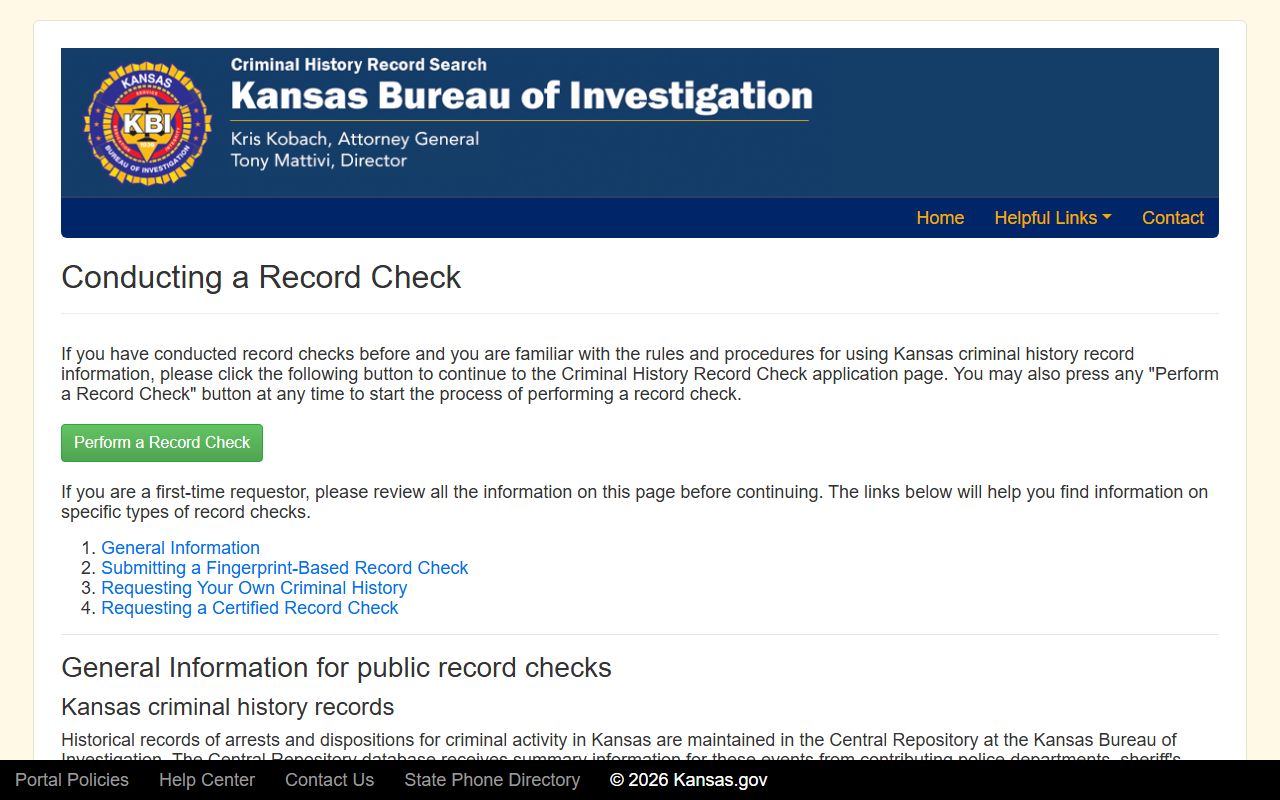
That statewide record-check path can help with broader history, but the certified Linn County court disposition remains the better source for one case result.
Reading Linn County Dispositions
Disposition means the court result for the case or count. Common entries include guilty, not guilty, dismissed, dismissed with prejudice, dismissed without prejudice, diversion, acquitted, transferred, or disposed. A sentence is the penalty or court order imposed after a conviction. In Kansas criminal files, a sentence can include probation, jail, prison, fines, costs, restitution, payment plans, supervision terms, or post-release conditions. Financial details in CaseSearch may help show unpaid costs, but they do not replace the judgment or sentencing order.
Diversion deserves special care in Linn County. The Linn County County Attorney's Office links to an Adult Diversion Program described as second chances for eligible minor offenses. Diversion is prosecutor-controlled and case-specific. A docket may show a filed charge and later diversion or dismissal activity. The docket should be read with the plea, diversion agreement if public, dismissal entry, and expungement status before deciding what the case means.
Note: A court disposition is case-specific. A statewide criminal history search and a district court case file can show different levels of detail.
Sealed vs Expunged Criminal Records
Public access has clear limits. Kansas Supreme Court Rule 22 governs electronic access to district and appellate case records, and official court notices state that sealed cases and sealed records are not available through CaseSearch or courthouse terminals. Kansas juvenile offender records, juvenile law enforcement records, medical and treatment records, protection cases, adoption matters, and several sensitive case categories are not ordinary public records. Redactions can also remove Social Security numbers, financial account details, protected addresses, minor identifying information, and medical data.
| Point | Sealed Record | Expunged Record |
|---|---|---|
| Public visibility | Closed from ordinary public access by law or court order. | Public access is restricted after a court grants expungement. |
| Main Kansas source | Court rule, statute, or case-specific sealing order. | K.S.A. 21-6614 for many adult criminal matters. |
| Juvenile records | Often restricted under Kansas juvenile statutes. | Juvenile expungement follows separate juvenile provisions. |
| Access after restriction | May still be available to parties, courts, law enforcement, or by court order. | May remain available for specific statutory uses, licensing, sentencing, or law enforcement. |
The Kansas juvenile offender statutes cover juvenile court records, law enforcement and municipal juvenile records, treatment records, and juvenile expungement.
Juvenile and protected records should be confirmed through the court because public search tools intentionally hide many restricted categories.
Linn County Criminal Record Access
Criminal court record access in Linn County uses more than one rule set. Court records are governed by Kansas court rules, including electronic access limits. County government and sheriff records use the Kansas Open Records Act process. The Linn County KORA form is useful for public sheriff or county records, but it is not the normal route for certified court case copies. That distinction prevents delays. Ask the Clerk of the District Court for court filings and ask the sheriff or county records custodian for sheriff records.
Key access rules:
K.S.A. 45-215 identifies the Kansas Open Records Act title for county records requests.
K.S.A. 45-216 through 45-219 cover public policy, inspection requests, refusals, and fees.
Kansas Supreme Court Rule 22 controls public electronic access to court case records.
The Kansas Open Records Act page is a county-record source, while Rule 22 is the electronic court-record boundary. The Kansas adult expungement statute is also important when a criminal case no longer appears in a public search.
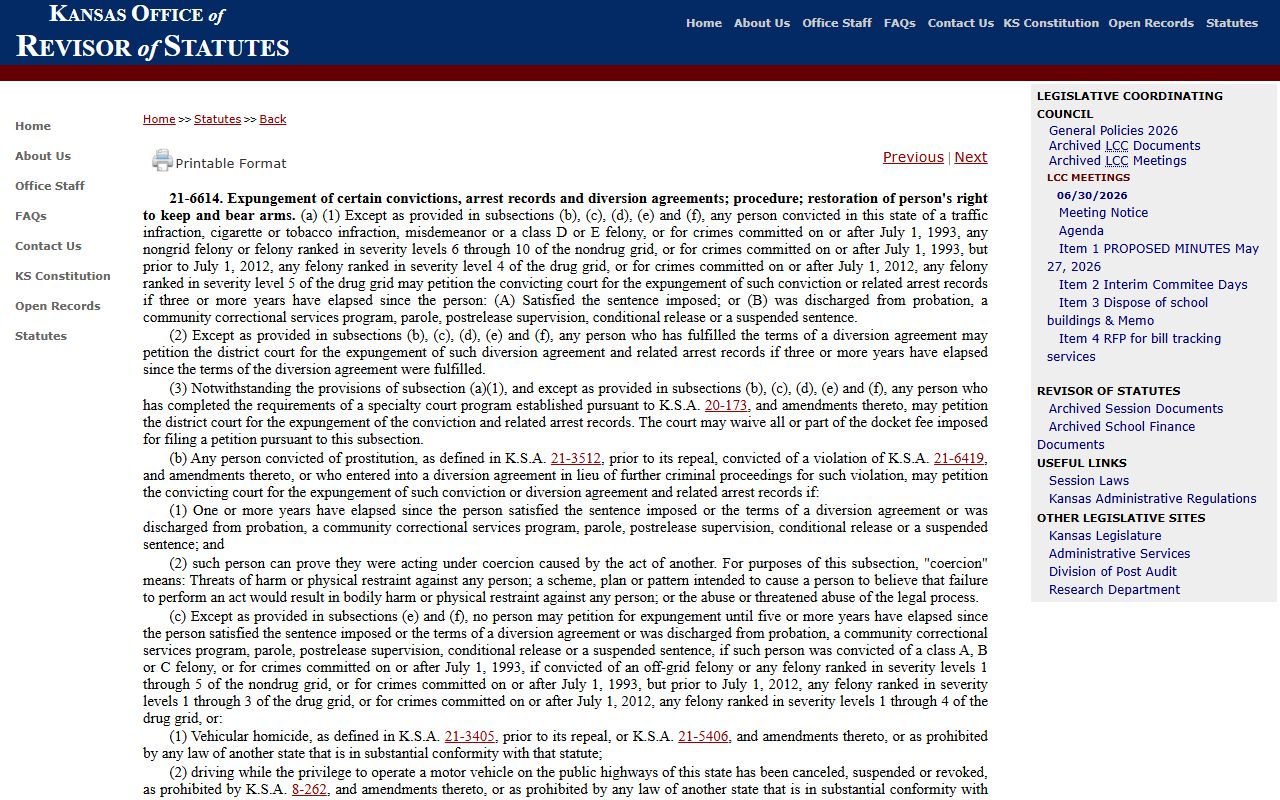
Expungement and sealing laws explain why some Linn County criminal case information may not appear in a public portal even when a case once existed.
State Criminal History Sources
Statewide systems help answer different questions. The Kansas Criminal History Record Search is a fee-based Kansas Central Repository search. The KBI registered offender site is for sex, violent, and drug offender registration information, not every criminal case. KDOC resources help locate people who are sentenced to Kansas prison or under KDOC supervision. None of these sources replaces the Linn County District Court case file for a local case outcome.
The KBI registered offender website is a separate public system for offender-registration records.
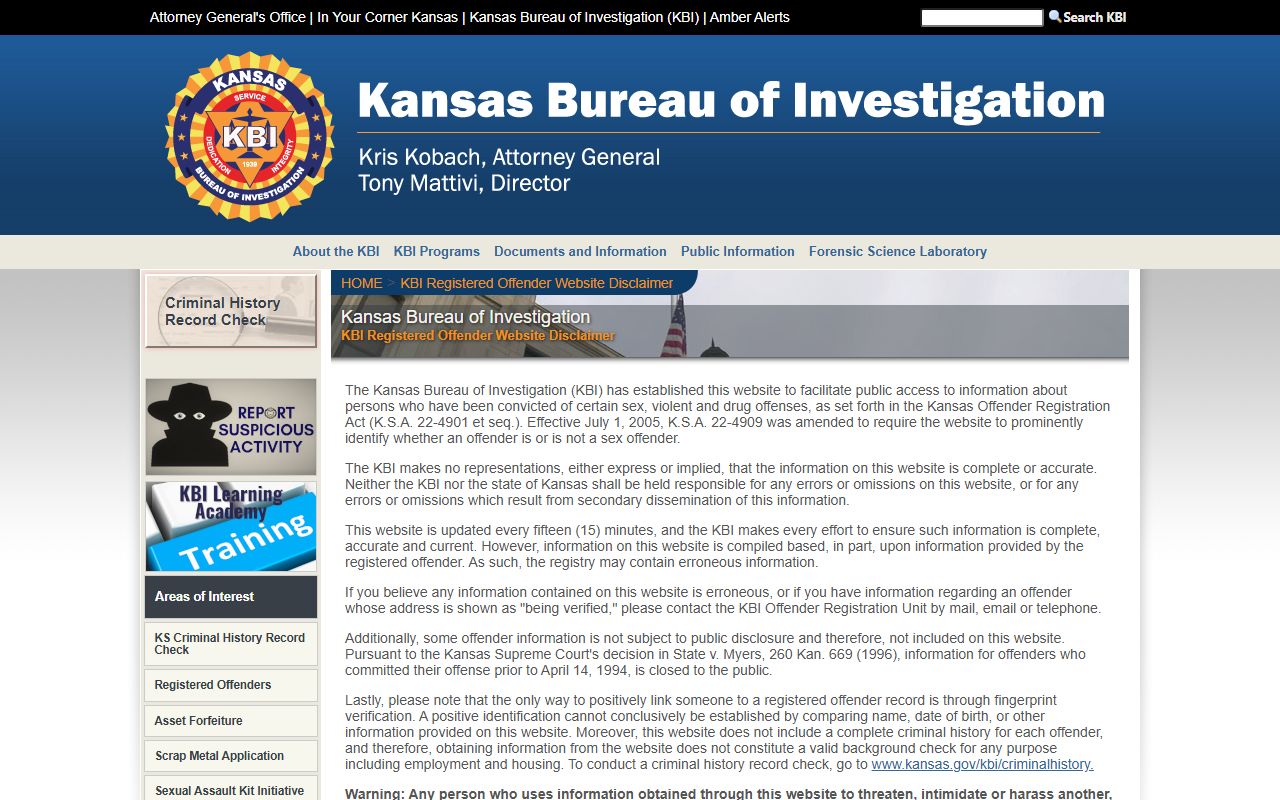
Registration status, prison custody, criminal history, and court disposition should be checked in the system that actually maintains each record.
The Kansas Department of Corrections is the state source for prison and correctional-services information.

KDOC information can help after sentencing, while the Linn County court docket remains the record of the prosecution and judgment.
Restricted Linn County Criminal Records
Some Linn County criminal records are public only in part, or not public at all. Restricted categories include juvenile offender records, juvenile law enforcement records, sealed and expunged records, unexecuted or sealed warrant materials, care and treatment records, grand jury matters, protected domestic records, records with medical or psychological content, and personal identifiers. CaseSearch and courthouse terminals exclude sealed cases and sealed records. A missing online result can mean no public online record, a sealed case, a non-digitized record, a municipal case, a name mismatch, or a record kept by another agency.
For certified proof, use the Clerk of the District Court. For booking records, sheriff incident records, or public county records not shown online, use the Linn County KORA process. For active custody, use the jail roster or sheriff contact channels. For full court-record context beyond criminal files, use the general Linn County court records page.