
Search Linn County Court Records
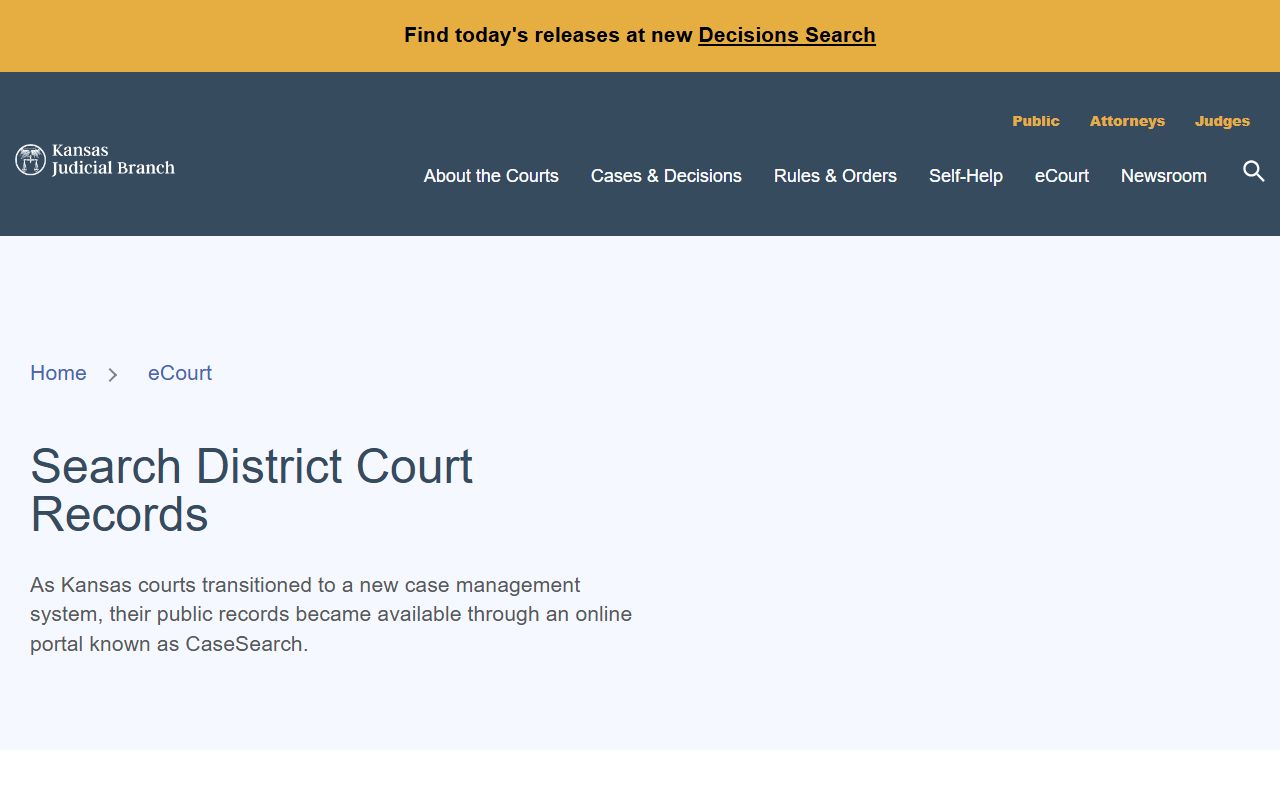
The main online path for Linn County District Court records is Kansas CaseSearch, the statewide public district court search system. The Kansas Judicial Branch says the older public access portal was replaced by CaseSearch, and the current system is used for public case information and documents that Kansas law permits users to see. CaseSearch is the first stop for civil, criminal, probate, domestic, small claims, and traffic matters filed in District Court, but it is not the only access channel.
The official Kansas district court records page also points users to courthouse terminals for public records that are not available online. For Linn County, that means the District Court Justice Center in Mound City can matter when a file is older, not digitized, not displayed in CaseSearch, or needs a certified copy. If the record is a county administrative record, sheriff record, or commission record, the county KORA process is separate from the court case file process.
Linn County's official homepage shows the county government entry point for offices, calendars, and departments.
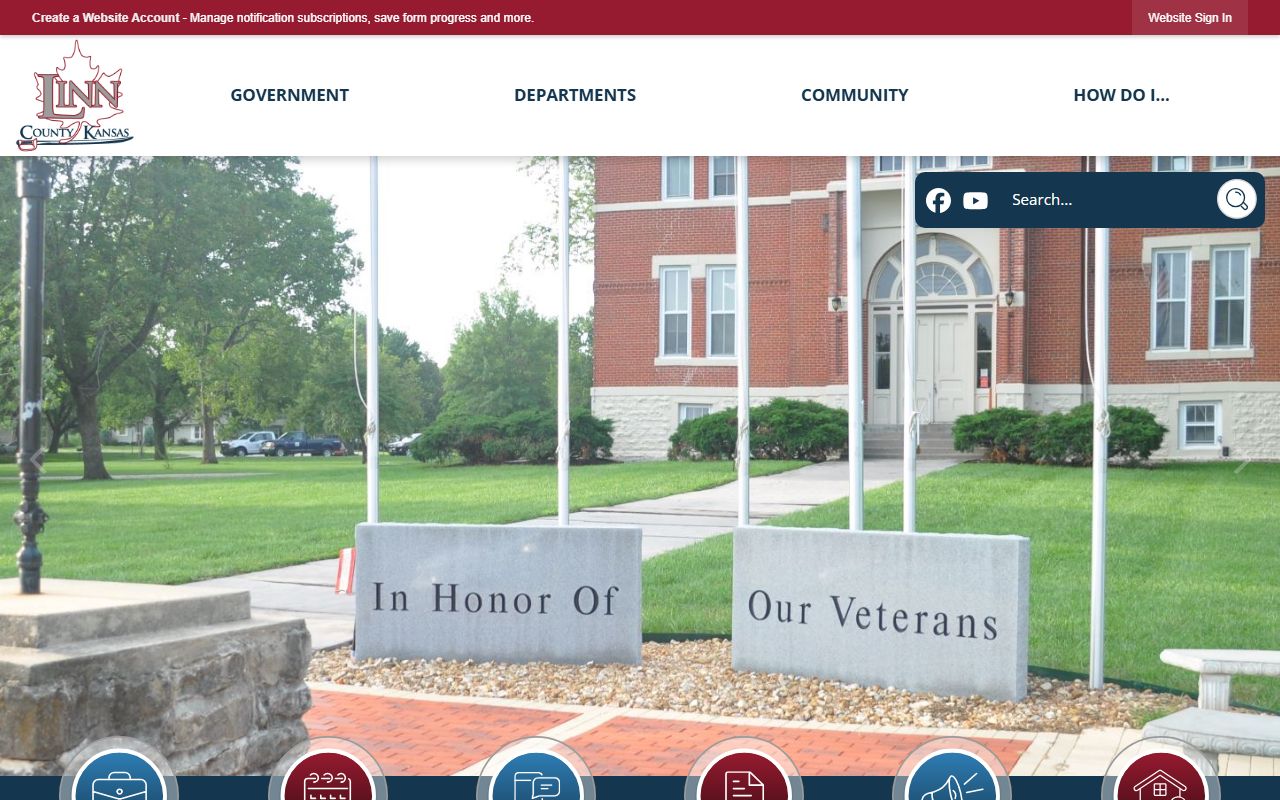
The county homepage is useful for finding the correct office before deciding whether a record belongs with the court clerk, county clerk, sheriff, attorney, or motor vehicle office.
- Open Kansas CaseSearch and search by case number if one is known.
- Use a party name search when a docket number from a ticket, booking record, or older paper is not accepted.
- Try citation search for traffic matters that reached District Court.
- Review docket entries, status, hearing dates, and financial details where public.
- Contact the Clerk of the District Court for certified copies or public files not shown online.
Note: Sealed cases and sealed records are not available through CaseSearch or courthouse terminals.
Linn County Court Search Fields
Kansas CaseSearch was documented through official Kansas court materials and public snippets because automated access met captcha and Cloudflare barriers. The Smart Search instructions say a record or case number, or a name, is required. The state search materials also identify party name, business name, citation, and role-dependent criteria. Public users should treat the search as a public access tool, not as a full internal clerk view.
The Kansas CaseSearch public portal is the county's most important court record search channel.
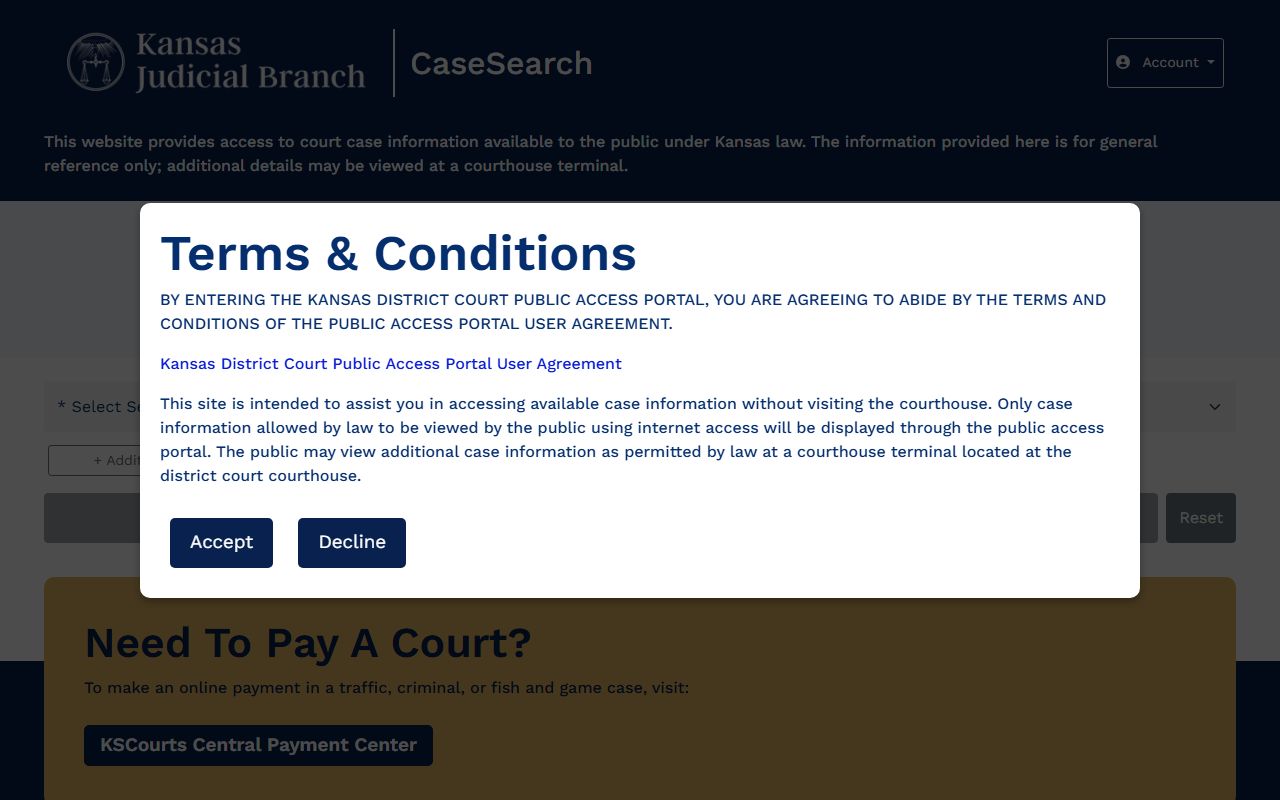
CaseSearch helps users move from a name, case number, or citation to public case data, but the courthouse terminal and clerk remain the fallback when the portal does not show a public file.
| Field | Type | Use in Linn County |
|---|---|---|
| Record / Case Number | Text | Use formats like 2019CV25 or RL2019CV25 when the number is known. |
| Name / Party Name | Text | Best fallback when an older number or booking note does not match. |
| Business Name | Text | Useful for civil or limited action cases involving a business. |
| Citation | Text | Useful for traffic citations filed in District Court. |
| Robot Check | Captcha | Public systems may require proof the user is not a robot. |
Where Linn County Court Records Are Kept
Linn County uses two nearby Main Street addresses that can confuse records seekers. District Court case files are tied to the Linn County District Court Justice Center at 308 Main Street, Suite 105, Mound City, Kansas. County administrative records, county clerk records, motor vehicle services, and many county government functions use the historic Linn County Courthouse at 315 Main Street. The right building depends on the record type.
The Linn County elected officials page names several offices that often appear in record questions.
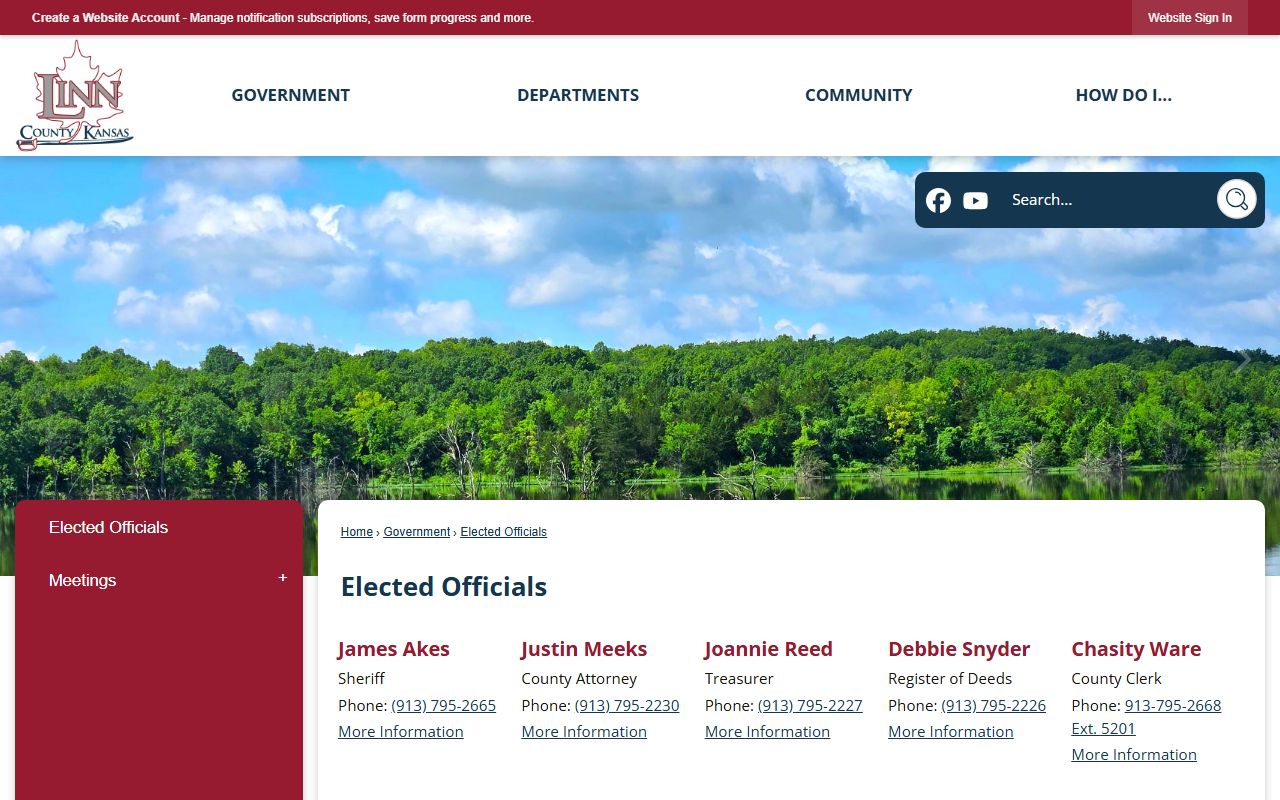
Those office names help separate court records from county government records, sheriff records, county attorney matters, and vital-record issues.
Linn County District Court Justice Center
308 Main Street, Suite 105
Mound City, KS 66056
913-795-2660
Hours listed by Kansas courts: 8 a.m. to 4 p.m.
Linn County Courthouse
315 Main Street
Mound City, KS 66056
913-795-2668
County administrative courthouse and County Clerk location.
Linn County Sheriff
308 Main Street, Suite 103
Mound City, KS 66056
913-795-2665
24-hour emergency service; call 911 for emergencies.
Linn County Court System
Kansas has a unified judicial branch. The Kansas Supreme Court sits at the top, followed by the Kansas Court of Appeals, District Courts, and Municipal Courts. Linn County is part of the 6th Judicial District with Bourbon and Miami counties. The District Court is the general jurisdiction trial court for county-level criminal, civil, probate, divorce, juvenile, small claims, limited action, and many traffic matters.
The 6th Judicial District page identifies the regional court structure for Linn County.
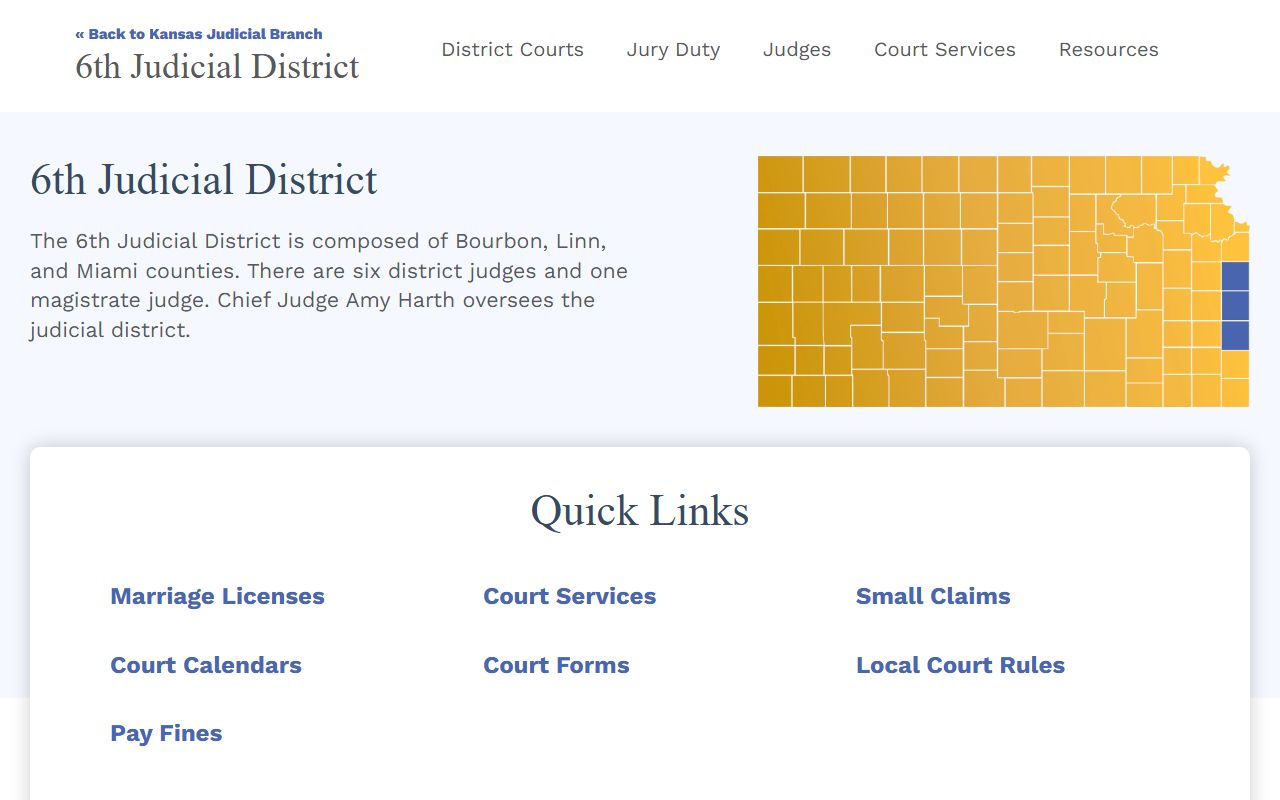
That district context matters when a case involves a district judge, district-wide court administration, or an appeal path out of the local trial court.
Case flow: Municipal Court or District Court filing › District Court judgment when applicable › Kansas Court of Appeals › Kansas Supreme Court.
| Court or Office | Role | Common Linn County Records |
|---|---|---|
| District Court | General jurisdiction trial court | Criminal, civil, domestic, probate, small claims, and some traffic cases. |
| Municipal Courts | City ordinance courts | La Cygne and Mound City ordinance and city traffic matters. |
| Kansas Court of Appeals | Intermediate appellate court | Appeals from District Court unless direct Supreme Court review applies. |
| Kansas Supreme Court | Highest state court | Final state appellate review and court rules. |
Linn County Court Record Types
Linn County court records vary by court level and case type. A civil case may include petitions, answers, service returns, motions, orders, judgments, garnishments, liens, and satisfaction filings. A criminal case may include the complaint or information, bond order, arraignment entry, plea, motions, docket events, disposition, sentence, probation terms, fines, fees, restitution, and later post-judgment events.
Family, marriage, probate, traffic, and juvenile files have their own access limits. Divorce decrees are District Court records, while KDHE divorce certificates are separate vital-record products. Completed marriage licenses are first filed with the Clerk of the District Court in the county where issued, then forwarded to KDHE. Probate is filed in District Court, while juvenile offender and many protection or care-and-treatment records are restricted.
- Criminal case files: filed charges, court events, plea or trial results, disposition, sentence, and financial details where public.
- Civil case files: pleadings, summons, motions, orders, judgments, garnishment, and satisfaction records.
- Domestic records: divorce decrees and domestic orders held by District Court, with privacy limits in some categories.
- Probate records: estates, wills, guardianships, conservatorships, trusts, and determination of descent matters.
- Traffic matters: a split system where issuing agency controls whether the case starts in municipal court or District Court.
What Linn County Court Records Show
Official portal materials indicate that public Kansas district court records can show case number, caption, case type, filing date, case status, event or docket entries, hearings, documents where public and electronically available, financial details, and permitted document links. CaseSearch also added more search types, filtering within case events, and expanded financial details when it replaced the former public portal.
| Field | What It Means |
|---|---|
| Case Number | The court identifier that may show year, case type, county/location, and sequence. |
| Party Names | Plaintiff and defendant, state and defendant, petitioner and respondent, or estate/decedent names. |
| Docket Entries | A date-by-date list of filings, hearings, orders, pleas, judgments, sentencing, or dismissal events. |
| Status | Open, closed, disposed, dismissed, transferred, stayed, sealed, or inactive depending on the system term. |
| Financial Details | Fines, court costs, bond, restitution, payments, and other assessments where shown. |
Linn County Court Access Laws
County government records use the Kansas Open Records Act, while electronic court records also follow Kansas Supreme Court access rules. KORA is relevant for county administrative records, sheriff records, and records requested through the Linn County Clerk. Court case files, however, must be handled through the Kansas court system, CaseSearch, courthouse terminals, and the Clerk of the District Court when the record is a judicial file.
Key access rules:
K.S.A. 45-215 identifies the Kansas Open Records Act used by Linn County's KORA form.
K.S.A. 45-218 and 45-219 govern inspection requests, refusals, fees, and copy costs for public records.
Kansas Supreme Court Rule 22 controls public electronic access to district and appellate case records.
K.S.A. 21-6614 governs adult expungement for eligible convictions, arrest records, and diversion agreements.
Restricted Linn County Court Records
Restricted records include juvenile offender records, juvenile law enforcement and municipal court records, sealed and expunged criminal records, adoption, care and treatment, protected domestic or protection records, sealed warrants, unexecuted search-warrant materials, medical or psychological records, protected addresses, financial account numbers, and minor identifying details. Rule 22 and portal rules are the practical line for online access.
Sealed cases and sealed records are not available through CaseSearch or courthouse terminals. Some records can still exist in the court file but require party status, attorney access, a court order, or a statutory basis for access. Adult expungement usually requires a petition in the court that handled the case, and juvenile expungement is governed by separate juvenile statutes.
Linn County Criminal Records
Criminal records in Linn County split into several products. A District Court criminal case file shows the filed court case, charges, pleas, motions, hearings, disposition, sentence, and court costs where public. A booking or jail roster entry can show custody and bond details, but it is not the final court record. A Kansas Bureau of Investigation criminal history check is a separate statewide criminal history product.
The County Attorney's Office handles local prosecution and diversion issues. The office is at 308 Main Street, Suite 101, Mound City, and the county page identifies Justin Meeks as County Attorney. Diversion is relevant because a diversion agreement can affect the case outcome and later expungement timing, but the court docket remains the place to confirm filed case events.
Linn County Sheriff and Jail Records
Sheriff James Akes is listed as the Linn County Sheriff. The Sheriff's Office staff directory places the office at 308 Main Street, Suite 103, Mound City, with office phone 913-795-2665, emergency phone 911, weekday office hours, and 24-hour emergency service. Inmate access channels include the current inmate roster page, the separate inmate portal with a captcha gate, phone or in-person contact with the Sheriff, KDOC KASPER for state custody, and a county KORA request for public sheriff records not shown online.
The official Linn County inmate search portal shows a captcha gate before the roster search interface.
Custody records should be checked against the current roster and, when needed, confirmed with the Sheriff's Office because county commission minutes show prisoner movement can include farmed-in and farmed-out counts.
Linn County Warrants and Traffic
No official Linn County Kansas active warrant search or county most-wanted list was found in the research. Warrant confirmation should use direct official channels: Sheriff's Office, District Court, the issuing municipal court, the inmate roster if the person has been booked, KBI Most Wanted for statewide wanted persons, and KORA for public sheriff records that can be released. Unofficial warrant sites and similarly named Oregon pages should not be used as Linn County Kansas sources.
Traffic records depend on the issuing agency. La Cygne Municipal Court handles La Cygne city ordinance and traffic matters, meets the third Tuesday of each month at 6 p.m., and publishes payment, continuance, dress, prohibited item, and failure-to-appear rules. Mound City Municipal Court is established by city code for ordinance matters and sets local court costs, fingerprint fees for certain misdemeanors, and warrant or citation costs for failure to appear or comply. Sheriff and Kansas Highway Patrol citations may route to District Court.
The La Cygne Municipal Court page gives unusually detailed local traffic and court-day instructions.
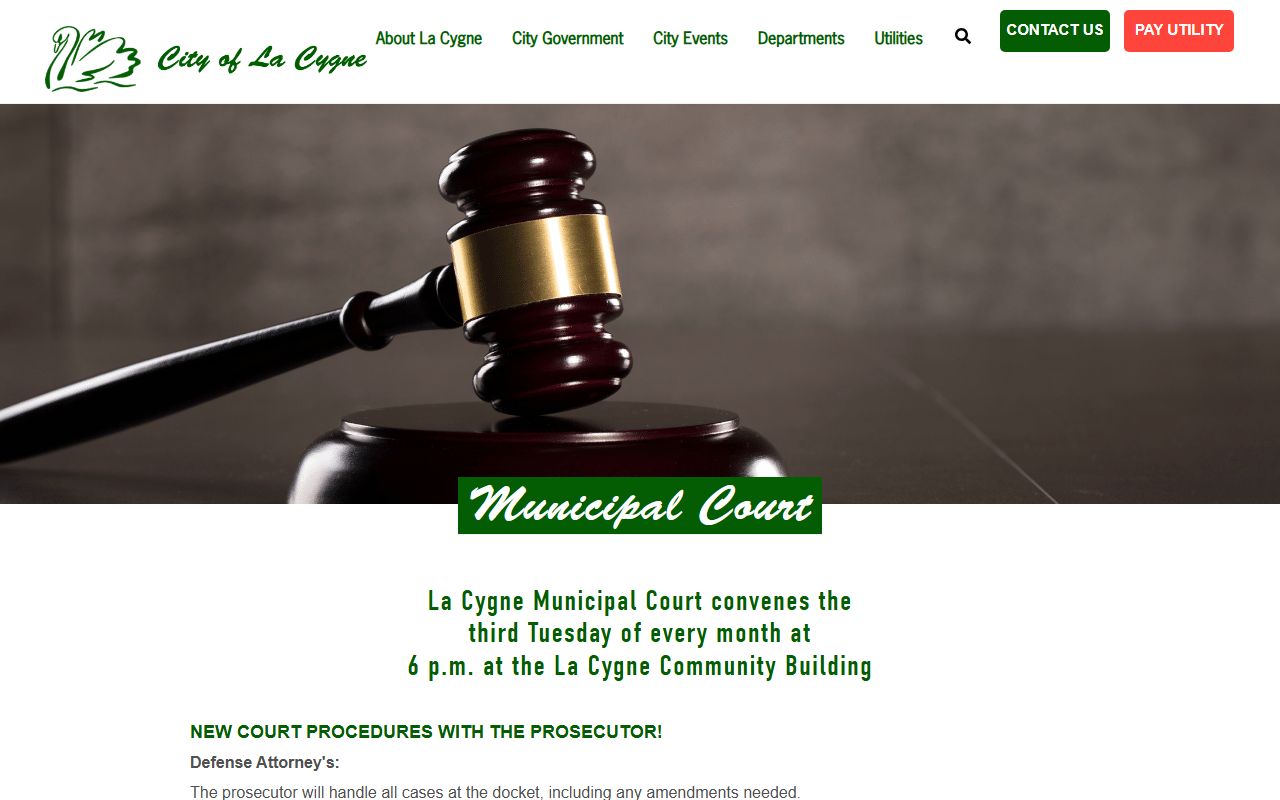
Those instructions help traffic users decide whether a citation belongs in municipal court, District Court, or a state driver record system.
Linn County Marriage and Probate
Kansas marriage license applications are electronic through the Kansas court system. Completed marriage licenses are first filed with the county Clerk of the District Court and then sent to KDHE Office of Vital Statistics. KDHE marriage certificates began May 1, 1913, and cost $20 per certified copy through the state vital-record process. The IKAN app is a state services app for vital records, not a sheriff or warrant app.
Divorce records split in a similar way. A divorce decree comes from the District Court where the divorce was filed. A KDHE divorce certificate is not the decree and contains basic certificate information. Probate is also handled in Linn County District Court, not a separate probate court. Probate matters include wills, estates, guardianships, conservatorships, trusts, and determination of descent.
The KDHE marriage certificate page explains the state certificate channel.
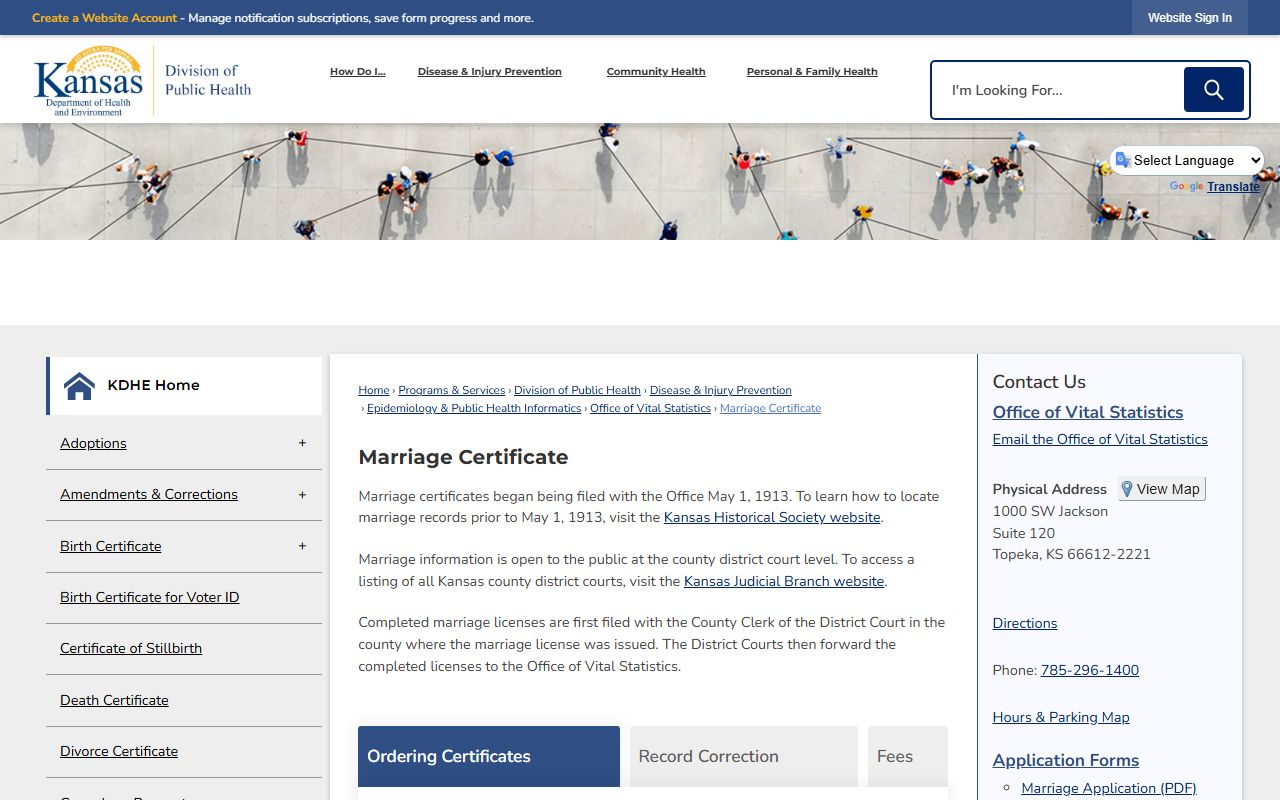
That state certificate channel is separate from the county district court file, which is why a legal decree or case document may still require the clerk.
Linn County Record Fees
The clearest local fee schedule in the research is the Linn County KORA Request Form for county government records. It is useful when a request goes to the County Clerk, sheriff, or county administrative office. It should not be treated as the full fee schedule for District Court case files, KDHE vital certificates, or federal records. District Court filing and copy fees should be confirmed with the Clerk of the District Court or the Kansas Judicial Branch fee page.
| County KORA Item | Fee or Rule |
|---|---|
| Black-and-white copies, letter or legal | $0.25 per page |
| Color copies | $0.50 per page |
| Oversized documents | Actual cost |
| Certified county copies | $1.00 per document |
| Email delivery | No charge |
| Search, review, redaction, or compilation | $30.00 per hour, prorated to the nearest 15 minutes |
Federal Court Records Near Linn County
Federal civil, criminal, bankruptcy, and appellate records are not held by Linn County District Court. Linn County sits within the U.S. District Court for the District of Kansas. Federal district court records use PACER, public terminals at federal divisional offices, federal clerk copy requests, and NARA for archived closed files. Bankruptcy records use the U.S. Bankruptcy Court for the District of Kansas, and federal appeals go to the Tenth Circuit.
The District of Kansas court records page explains public terminals, PACER, clerk requests, and archive retrieval.
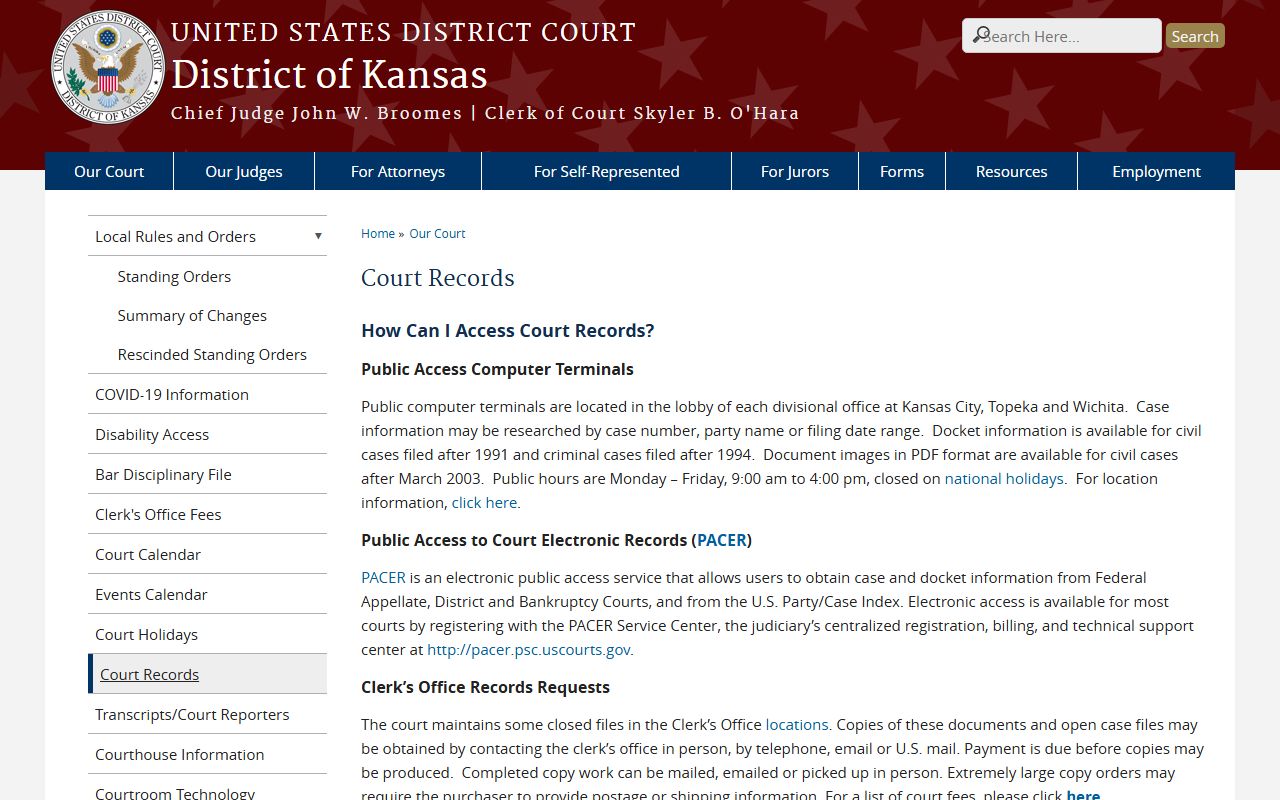
Federal access rules and fees differ from Kansas District Court access, so a federal case should not be requested through the Linn County clerk.
The PACER access site is the main online federal records portal.
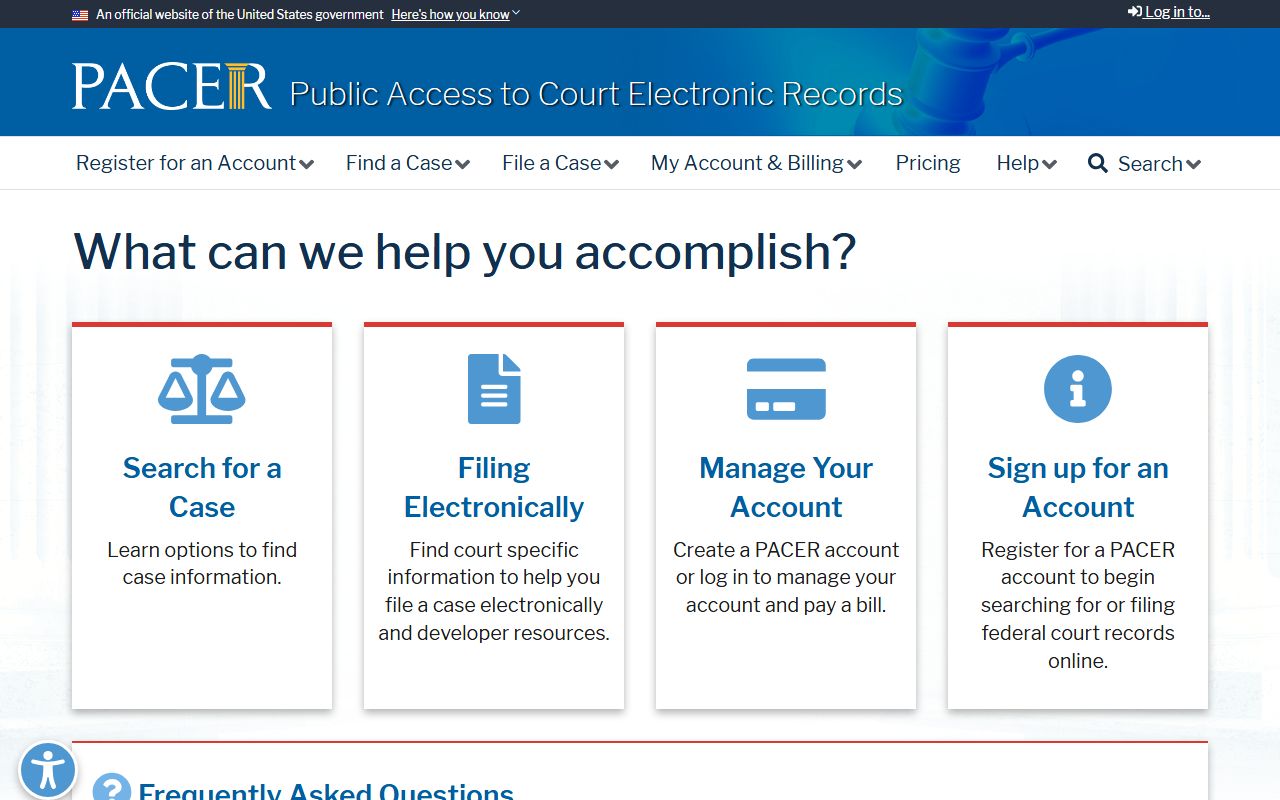
PACER covers federal appellate, district, and bankruptcy case information, while county and Kansas court records remain in state or local systems.
Read Linn County Court Terms
Court records use terms that can change the meaning of a search result. A charge is an alleged offense. A conviction is a finding or plea that the person committed an offense. A docket is the event list for a case. A disposition is the final outcome of a charge or case. A sealed record is closed to ordinary public access by law or court order.
- Complaint
- An initial charging document in a criminal case, or an initial pleading in some civil contexts.
- Information
- A prosecutor-filed criminal charging document.
- Journal entry
- A Kansas court document that records a ruling, judgment, or case event.
- Bench warrant
- A warrant issued by a judge, often after a missed court date.
- Expungement
- A court process that limits public access to eligible criminal records.
Linn County Court History
Mound City is the county seat. The historic Linn County Courthouse at 315 Main Street was built in 1886 and is described by the City of Mound City as the second-oldest operational courthouse in Kansas. Current court operations use the District Court Justice Center nearby at 308 Main Street, which means visitors may need to distinguish the historic county courthouse from the court building that holds District Court case files.
Modern access changed as Kansas moved toward centralized case management and online public records. CaseSearch replaced the former public access portal and added broader search types, event filtering, and expanded financial details. Older paper files, restricted records, and non-digitized records may still require courthouse terminal access or direct clerk assistance.
Linn County Court Records FAQ
Where do I start a Linn County court records search?
Start with Kansas CaseSearch for public District Court records. If the record is not online, use the courthouse terminal or contact the Clerk of the District Court. Use municipal courts for city ordinance or city traffic matters, and use the county KORA process for non-court county government records.
Are Linn County warrants searchable online?
No official Linn County Kansas online warrant list was located in the research. Confirm warrants through the Sheriff's Office, District Court, the relevant municipal court, or official state sources such as KBI Most Wanted when the issue is statewide.
Is a KDHE divorce certificate the same as a decree?
No. KDHE divorce certificates contain basic vital-record information. Certified divorce decrees come from the District Court where the divorce was filed.
Can sealed records appear in CaseSearch?
No. Official Kansas court materials state sealed cases and sealed records are not available through CaseSearch or courthouse terminals.