
What Linn County Court Dockets Show
A docket is the chronological record of case activity. In Linn County District Court, a docket may show that a petition was filed, a summons issued, a complaint entered, a hearing scheduled, an order signed, a plea entered, a judgment filed, a payment event posted, or a case dismissed. It is the running case log. It does not always include the full text of a motion, order, exhibit, decree, or sentencing document.
Dockets are most useful when a person needs status and timing. They can show whether a case is open or disposed, when a hearing is set, which judge or courtroom is listed, and what event happened next. They can also show gaps. A sealed record may not appear. A restricted document may be represented by a limited event entry or no public entry at all. In probate, domestic, juvenile, protection, and criminal matters, public access depends on Kansas court rules and the case type.
- Docket entry
- A single event in the case timeline, such as a filing, hearing, order, plea, judgment, or dismissal.
- Hearing date
- The date and time the court has set for an appearance, motion, status review, trial, or other docket setting.
- Disposition
- The case or charge outcome, such as dismissed, judgment entered, plea accepted, sentence imposed, or closed.
- Continuance
- An order or approved request moving a hearing or deadline to a later date.
Find Linn County Dockets in CaseSearch
The online starting point for Linn County District Court docket information is Kansas CaseSearch. It is the public search tool for Kansas district court case information and replaced the former public access portal. Use it for District Court matters filed in Linn County, including civil, criminal, probate, small claims, limited action, domestic where public, and some traffic cases. Search by case number when available, or by party name when the case number is unknown.
CaseSearch is not a daily courtroom calendar for every local court. It is a case information system. Hearing dates appear as docket events or scheduled settings when public and available in the case record. If a public case does not appear online, Kansas court access materials point to the courthouse terminal or clerk channels. The courthouse terminal matters in Linn County because older records, non-digitized files, and records not shown through online public access may still be available if they are public.
- Open Kansas CaseSearch and complete any captcha or public-access prompt.
- Enter the record or case number if it is known. If not, search by party name or business name.
- Confirm that the result is a Linn County District Court case and not a similarly named party in another Kansas county.
- Open the case details and review the event list for filed documents, orders, hearings, disposition entries, and financial events.
- Contact the Clerk of the District Court or use the courthouse terminal when a public docket or hearing record is not displayed online.
Linn County Docket Events
No live Linn County CaseSearch docket entry was opened during research because automated access encountered public portal controls. The docket inventory below uses official Kansas portal descriptions and the researched court-record field list. It reflects the kinds of public event information a person should be prepared to read, while recognizing that sealed or restricted entries are not public.
| Field | What It Shows |
|---|---|
| Entry Date | The date a filing, order, hearing notice, payment event, or other case action was entered on the docket. |
| Event Type | The short label for the action, such as petition filed, complaint filed, summons issued, hearing scheduled, journal entry, order, plea, judgment, sentencing, satisfaction, or dismissal. |
| Party Filing | The party, attorney, prosecutor, or court actor tied to the entry when that information is public. |
| Hearing Date | The date and time for a future or past court appearance when the case event includes hearing information. |
| Judge or Location | The judge, courtroom, or court location when available in the public docket event. |
| Document Link | A link or reference to a public electronic document when the document is available and not restricted by rule or order. |
| Financial Event | Costs, fines, restitution, payment plans, bond, or other assessment details when shown by the court system. |
| Status Result | A case or event outcome, such as disposed, dismissed, transferred, stayed, inactive, sealed, or closed. |
Note: A docket event can confirm that a document exists without giving public access to the full document image.
Linn County Hearing Dates
Hearing dates in Linn County District Court are tied to the case record and the court's schedule. Kansas Judicial Branch materials identify Linn County as part of the 6th Judicial District with Bourbon and Miami counties. The Linn County District Court Justice Center is the local court venue for District Court case files and docket records. Research snippets identify District Judge Andrea Purvis and Clerk of the District Court Gina Witherspoon for Linn County court operations.
When a hearing date is needed, the first check is the CaseSearch event list for the specific case. The second check is the public terminal at the courthouse. The third check is the Clerk of the District Court, especially if the record is older, not digitized, not displayed online, or needs certified confirmation. A public terminal can help locate case records that are not exposed through the online portal but are still public under court access rules.
Clerk of the District Court
Linn County District Court Justice Center
308 Main Street, Suite 105
Mound City, KS 66056
913-795-2660
Monday-Friday, 8 a.m.-4 p.m.
Linn County Dockets by Court
Not all Linn County docket information is in one place. District Court records are searched through Kansas CaseSearch, courthouse terminals, and the Clerk of the District Court. Municipal court dockets are city-level matters. Federal dockets use PACER or federal courthouse access. The right system is controlled by the court that has the case, not just by where the person lives.
| Court or System | Docket Role | Access Channel |
|---|---|---|
| Linn County District Court | Felony, many misdemeanors, civil, probate, divorce, domestic where public, small claims, limited actions, and district-level traffic matters. | CaseSearch, courthouse terminal, Clerk of the District Court. |
| La Cygne Municipal Court | La Cygne city ordinance and municipal traffic matters. | Municipal court page, court clerk, and monthly court session information. |
| Mound City Municipal Court | Mound City ordinance cases under city code. | Mound City municipal court code and city court clerk process. |
| Pleasanton City Matters | Police enforcement and local traffic routing where cited by city officers. | Contact Pleasanton Police or City Hall because a separate municipal court page was not located. |
| U.S. District Court for Kansas | Federal civil and criminal cases connected to Kansas. | PACER, federal public terminals, and federal clerk records requests. |
Municipal Dockets in Linn County
La Cygne Municipal Court is the most detailed municipal docket source located in the research. It holds court the third Tuesday of every month at 6 p.m. at the La Cygne Community Building, 204 N Commercial, La Cygne, KS 66040. The page lists Municipal Judge John Purvis and City Prosecutor Lauber Municipal Law. It also says La Cygne and Linn Valley both have court the third Tuesday of the month at 6 p.m., while Linn County District Court in Mound City assigns its own dates.
La Cygne's page gives a practical docket sequence. The docket is generally called alphabetically in categories: arraignments, pay or appear, hearings, plea docket, and trials. The prosecutor is available only 30 minutes before court. Court-clerk communications end at 4 p.m. on court day, and the clerk can only follow the judge's written rulings after disposition. Those details matter because an online payment link, including the city's citation and fee payment vendor, is not the same as the court's live docket or the judge's final order.
Mound City Municipal Court is established by city code for ordinance violations. The code says the Kansas Code of Procedure for Municipal Courts applies, the municipal court clerk dockets cases and preserves papers, and the court may assess costs for bench warrants, show cause or probation violation warrants, or citation warrants tied to failure to appear or failure to comply. Mound City dockets are city matters unless the case moves into a District Court path.
Note: A city ticket should be checked against the issuing agency before assuming it belongs in District Court.
Docket vs Full Case File
A docket is often enough to track timing, but it is not the whole case record. A docket can show that a complaint was filed, a plea was entered, or an order was signed. The full case file may include the complaint, information, petition, answer, motion, exhibit, journal entry, decree, sentence, or probate filing itself. A person checking only the docket may miss the text that explains what the judge ordered or what a party requested.
For Linn County District Court matters, start with CaseSearch for the docket and public online documents, then use the courthouse terminal or Clerk of the District Court for records that are public but not displayed online. For city matters, contact the municipal court. For federal files, use PACER or federal clerk channels. The broader Linn County court records route is best when copies, certified documents, or full pleadings are needed.
| Docket | Full Case Record | |
|---|---|---|
| Format | Chronological event list. | Case file with pleadings, orders, notices, decrees, judgments, and other documents. |
| Best Use | Track hearing dates, filings, status, disposition, and next event. | Read the actual filing or order, verify legal text, or obtain certified copies. |
| Access | Often visible through CaseSearch or court event lists if public. | May require a document link, courthouse terminal, clerk request, fee, or certified-copy process. |
| Limits | May omit restricted details or hide sealed case activity. | May be sealed, confidential, redacted, or unavailable online under Rule 22. |
Why Linn County Dockets Disappear
A missing docket does not always mean no case exists. Kansas Supreme Court Rule 22 and related court access rules restrict electronic access to sealed cases, sealed records, and sensitive case types. Public portal descriptions list categories such as adoption, care and treatment, protection from abuse, protection from stalking, juvenile CINC, juvenile offender, coroner matters, grand jury matters, material witness files, arrest expungement, and other restricted records. Juvenile records are also controlled by Kansas juvenile statutes.
Docket access can also be limited by timing and system history. Kansas moved district court records into centralized case management and launched CaseSearch as a newer in-house public search tool. Older case records, non-digitized events, and records filed before full electronic availability may require a courthouse terminal or clerk assistance. Expanded access is different from public access; attorneys and justice-system partners may use identity verification and rules that do not apply to ordinary public users.
Sealed or expunged records remain limited even if a person knows the case number. Adult expungement in Kansas is governed mainly by K.S.A. 21-6614, and juvenile records have separate statutory rules. If a docket is restricted, the public search system should not be treated as broken. The legal access limit may be the reason.
Federal Dockets for Linn County
Federal docket access is separate from Linn County District Court. Linn County is within the U.S. District Court for the District of Kansas. The District of Kansas court records page says case information can be researched by case number, party name, or filing date range, and public access terminals are available in Kansas City, Topeka, and Wichita divisional offices. The same research notes that civil docket information is available for cases filed after 1991 and criminal docket information for cases filed after 1994.
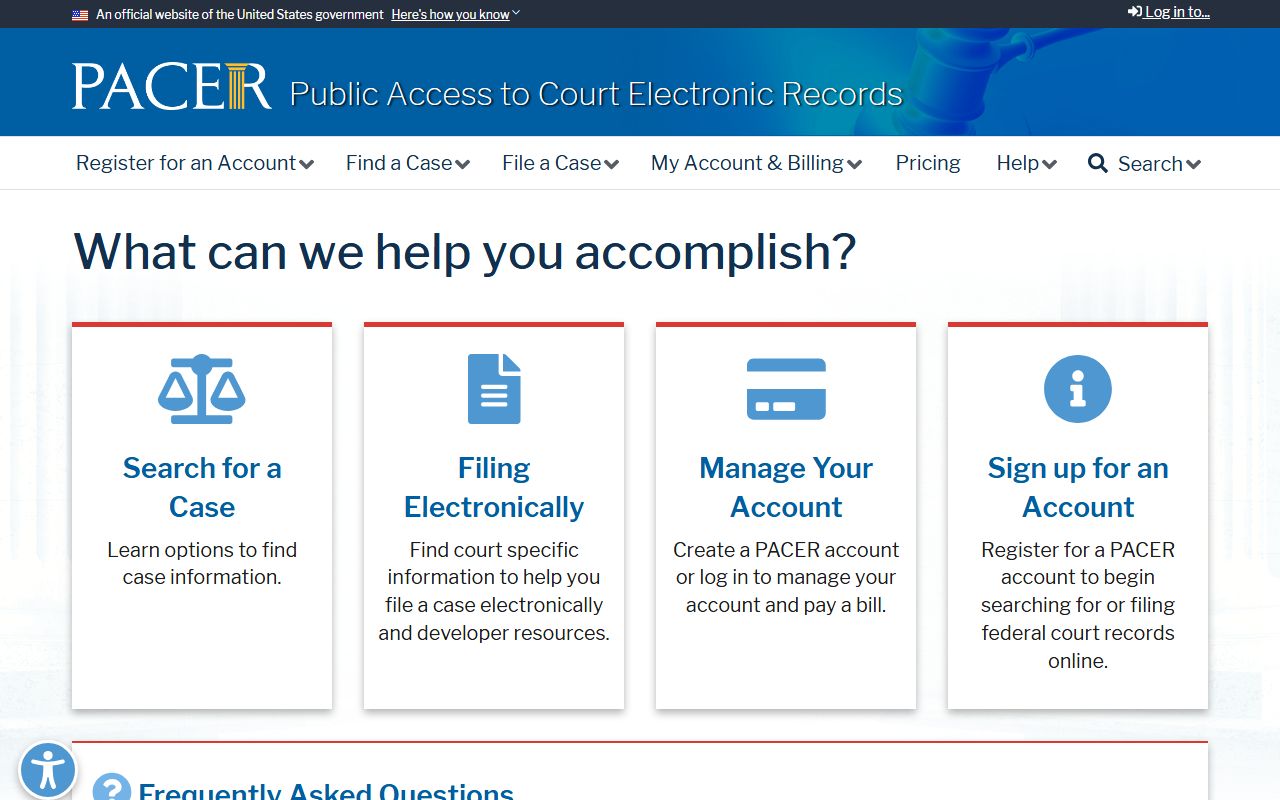
PACER is the national online access system for federal appellate, district, and bankruptcy court dockets. It is also the source for the manifest image assigned to this docket page.
The U.S. Marshals Service District of Kansas may appear in federal custody or enforcement contexts, but it is not a Linn County court docket source.
Read Linn County Docket Entries
Read a Linn County docket from the oldest entry to the newest when trying to understand case progress. The first entries usually show the opening document, such as a petition, complaint, citation, or information. Later entries may show service, motions, notices, hearings, bond activity, journal entries, judgments, sentencing, payments, and dismissal or closure. In criminal matters, charges and pleas can change, so the newest disposition entry matters more than the first allegation.
Case type also shapes the wording. A civil case may use plaintiff and defendant. A probate matter may use estate, decedent, executor, administrator, guardian, conservator, or ward. A domestic case may use petitioner and respondent. A criminal case may list State of Kansas and the defendant. A municipal case may list the city and defendant. Those labels help identify the court's role and the kind of event being shown.
For a hearing date, confirm the court, time, and current status close to the hearing. Continuances, plea settings, pay-or-appear settings, warrants for failure to appear, or written judge rulings can change the next step. La Cygne's municipal court page is a strong local example because it explains docket-call order, continuance deadlines, prosecutor availability, and the clerk's reliance on written rulings.